

News
The Ultimate Guide to Biodiesel Blends: B5, B10, B20, B100

Biodiesel is a clean-burning, renewable fuel made from renewable sources like vegetable oils, animal fats, and recycled cooking grease. Unlike conventional petroleum diesel fuel, which comes from crude oil pulled out of the ground, biodiesel fuels are produced through a process that turns these natural fats and oils into a usable fuel.
The chemical composition starts with fatty acids found in these raw materials, and through production, these are converted into a product that works in diesel engines but begins from very different materials than the fossil fuels.
Most of the time, pure biodiesel is not used on its own. Instead, blending biodiesel with regular diesel fuel creates what we call a blend. These blends are named by the percentage of biodiesel in the mix. A fuel that is one-fifth biodiesel and four-fifths petroleum diesel, for example, has its own name and label so you always know what you are putting in your tanks.
Whether you drive a single pickup truck, manage a fleet of delivery vehicles, or run heavy equipment on a job site, the blend you choose affects engine performance, emissions, fuel efficiency, and even warranty coverage.
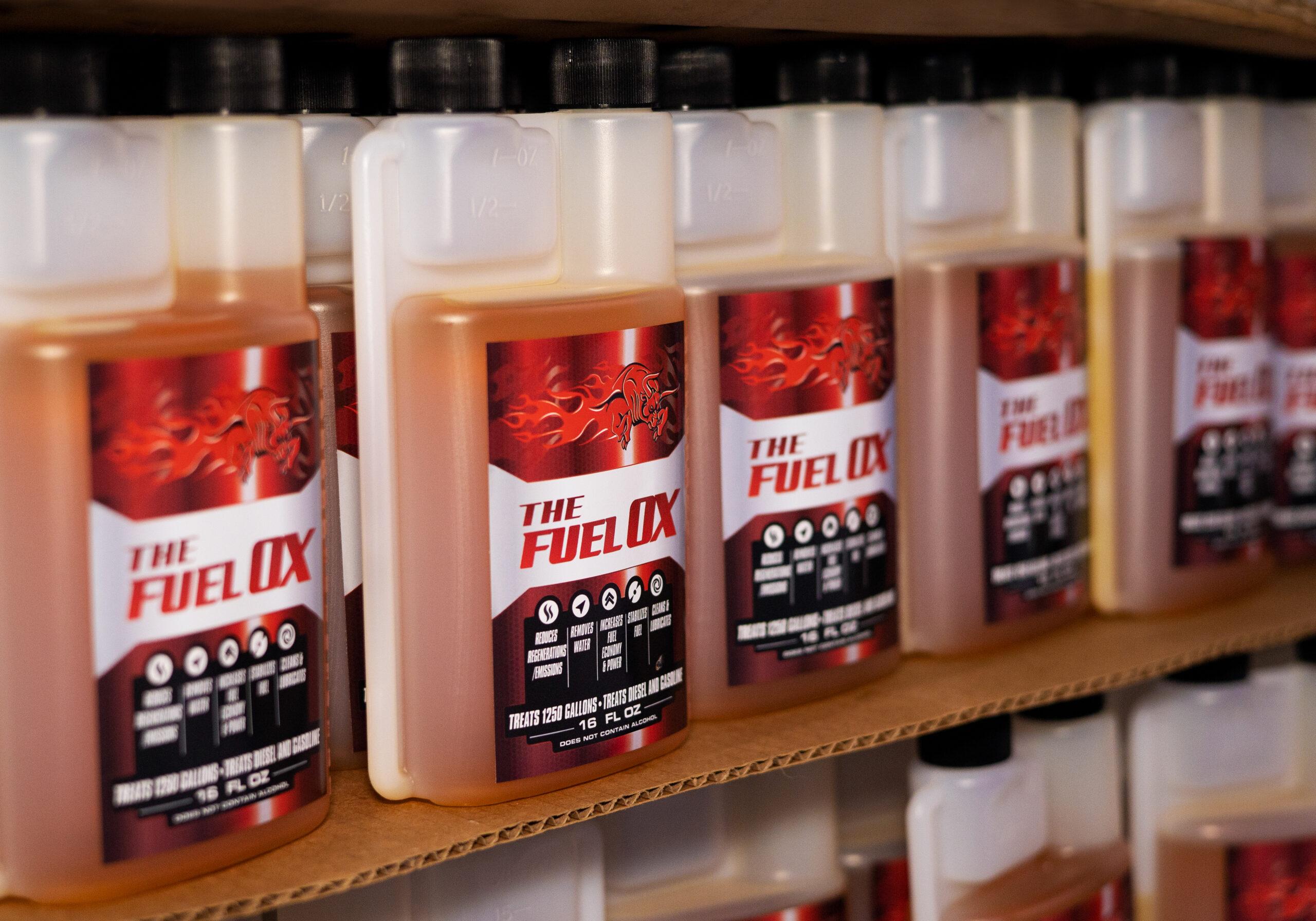
Picking the right one can lower your cost over the long run and protect your machinery. Fuel Ox® specializes in fuel additives built for these exact challenges, including treatments designed specifically for higher biodiesel blends, helping you keep your fuel stable and your engine running clean.
Key Takeaways
- Biodiesel blends mix renewable fuel with petroleum diesel; the “B” number shows the biodiesel percentage.
- B5 and B10 fit nearly all diesel engines, while B20 suits fleets and B100 needs special handling.
- Higher blends mean more renewable content, cleaner emissions, and better lubricity.
- The trade-offs are slightly lower fuel economy and weaker cold-weather flow.
- Always check your manual, manufacturer specs, and warranty before choosing a blend.
- Fuel Ox® Star Plus™ Bio is an additive built for B20 and higher blends.
How Biodiesel Blends Are Named
The naming system for these middle distillate fuels is simple once you know the trick. Every blend starts with the letter “B” followed by a number, and that number tells you the percentage of biodiesel in the fuel. The rest of the mix is petroleum diesel. So if you see “B20,” you know that 20 percent of the fuel is biodiesel and the other 80 percent is regular diesel.
This makes it easy to compare fuels at a glance. The higher the number, the more renewable content the fuel contains. Here is a quick reference list of the most common blends you will run into:
- B5 = 5% biodiesel, 95% petroleum diesel
- B10 = 10% biodiesel, 90% petroleum diesel
- B20 = 20% biodiesel, 80% petroleum diesel
- B100 = 100% pure biodiesel (no petroleum diesel)
Breaking Down the Common Biodiesel Blends
B5: The Entry-Level Blend
B5 is the gentlest step into biodiesel, made up of 5 percent biodiesel and 95 percent petroleum diesel. Because the biodiesel content is so low, this blend is compatible with nearly all diesel engines on the road today. Most manufacturers approve it without any special requirements, since the chemical properties stay so close to standard diesel.
B5 offers a small reduction in emissions compared to straight petroleum diesel, and it has minimal impact on fuel properties.
The fuel behaves almost exactly like the diesel you are used to, so there are no surprises in cold weather or in performance. This makes it ideal for users who want some renewable content without changing how their fuel behaves.
B10: The Middle-Ground Blend
B10 steps things up with 10 percent biodiesel and 90 percent petroleum diesel. It carries greater renewable content than B5, which means a larger share of your fuel comes from renewable energy sources. It also delivers improved emissions benefits over B5 while still keeping things easy to manage.
This blend remains compatible with many diesel vehicles and equipment, making it a sensible choice for owners who want to do more for the environment without jumping to a high-level blend. It strikes a comfortable balance between renewable content and everyday practicality.
B20: The Popular Higher-Level Blend
B20 contains 20 percent biodiesel and 80 percent petroleum diesel, and it is one of the most common higher-level blends in use. Fleet operators and government agencies often favor it because it provides significant renewable fuel content and meaningful lower emissions without requiring major changes to the engines or fuel system.
B20 has slightly lower energy content than pure petroleum diesel, which can mean a small dip in fuel economy and consumption. Cold weather performance is also a factor, since a higher percentage of biodiesel can thicken in low temperatures. With proper storage and seasonal planning, these are easy to handle.
B100: Pure Biodiesel
B100 is exactly what the name suggests: 100 percent biodiesel with no petroleum diesel at all. It sits at the far end of the operating range and offers the maximum amount of renewable content possible.
Because it is pure biodiesel, B100 has specialized handling and compatibility needs. Not every engine is built to run on it, and it requires extra care in cold weather and in storage tanks.
For these reasons, most everyday users stick with blends, while B100 tends to fit specific applications where the equipment and conditions are a good match.
Benefits of Using Biodiesel Blends
Renewable Fuel Content
One of the biggest reasons people choose a biodiesel blend is the renewable fuel content. The higher the biodiesel percentage, the greater the share of your fuel that comes from sustainable, plant- and waste-based sources rather than crude oil. Raw materials can include vegetable oils, palm oil, animal fats, and used cooking grease.
Choosing higher blends carries real environmental significance. Here are a few reasons this matters:
- It reduces reliance on fossil fuels that take millions of years to form
- It supports the use of recycled materials like used cooking oil
- It helps lower the overall carbon footprint of your vehicles and equipment
Emissions Reductions
Biodiesel blends burn cleaner than straight petroleum diesel, which leads to lower harmful emissions coming out of the tailpipe. Cleaner combustion is a major selling point for anyone trying to meet air-quality goals or simply reduce their impact.
Compared to conventional diesel, biodiesel can deliver these emissions improvements:
- Reduced particulate matter, the tiny soot particles that affect air quality
- Reductions in carbon monoxide, a colorless and harmful gas
- Reductions in unburned hydrocarbons released during combustion
Improved Fuel Lubricity
Biodiesel generally provides higher lubricity, which is the fuel’s ability to reduce friction between moving parts. Modern low-sulfur diesel can be hard on engine components because the refining process strips away natural lubricating properties. Adding biodiesel helps put some of that back and delivers better lubricity.
Better lubricity can benefit engine components by reducing wear on fuel pumps and injectors. Over time, this can mean fewer repairs and a longer life for the parts that keep your engine running smoothly.
Even a modest blend like B5 can offer this advantage, which is one reason many biodiesel producers and fuel suppliers add a small amount of biodiesel to their diesel as part of fuel quality and quality control.
Trade-Offs and Considerations
Biodiesel blends bring plenty of benefits, but no fuel is perfect for every situation. Before you fill up at the pump, it helps to understand the small trade-offs that come with higher blends. Knowing these ahead of time lets you plan smartly and avoid surprises down the road.
Fuel Economy
One thing to keep in mind is that higher blends may slightly reduce fuel economy and overall fuel efficiency. You might notice your tank does not stretch quite as far as it does on straight petroleum diesel, especially as you move up to blends like B20.
The reason comes down to energy. Biodiesel contains somewhat less energy per gallon than petroleum diesel, so it takes a little more fuel to do the same amount of work. The difference is usually small, but it is worth factoring in if you track fuel costs closely or cover long distances.
Cold-Weather Performance
Cold weather is another important factor, and it is the main reason higher blends like B20 require extra planning. Biodiesel can begin to thicken and cloud at low temperatures, which may affect how well the fuel flows through your fuel system on a freezing morning.
The good news is that cold-weather performance is easy to manage with a little foresight. Many operators plan for seasonal use by switching to lower blends in the winter months or by using cold-weather additives and proper storage.
Some additives are also blended with a small amount of kerosene to help the fuel flow. Matching your blend to the season keeps your engine starting smoothly no matter how low the temperature drops.
Engine Compatibility: Which Blend Can You Use?
Choosing a biodiesel blend is not just about what you want. It also depends on what your engine can handle. Compatibility depends on the vehicle manufacturer, and every engine maker sets its own guidelines for which blends are safe to use.
The good news is that many modern diesel engines can use B5 and B20 without any trouble. Lower blends like B5 are approved across almost the entire industry, while B20 is accepted by a growing number of manufacturers.
Still, you should never assume. Checking the owner’s manual or manufacturer recommendations is the best way to protect your engine performance and your wallet.
Before you commit to a blend, run through this simple checklist to verify what is approved:
- Consult your owner’s manual for the fuel specifications
- Review manufacturer recommendations for approved blends
- Confirm warranty implications for higher blends before filling up
Taking a few minutes to check these items, or to read a manufacturer’s fact sheet, can save you from costly repairs or a voided warranty later on.
Quick Comparison of B5, B10, and B20
Sometimes the easiest way to choose is to see your options side by side. Here is a quick overview of how the three most common blends compare in biodiesel percentage, petroleum diesel percentage, and typical characteristics.
| Blend | Biodiesel | Petroleum Diesel | Typical Characteristics |
| B5 | 5% | 95% | Behaves like regular diesel, compatible with nearly all engines, and has small emissions benefits. |
| B10 | 10% | 90% | More renewable content, improved emissions, still widely compatible |
| B20 | 20% | 80% | Strong renewable content and emissions cuts, slight fuel economy, and cold-weather considerations |
So when is each blend the right choice? B5 is best for drivers who want a worry-free option that acts just like the diesel they already use. B10 fits those ready to add more renewable content while keeping things practical. B20 is the go-to for fleets and operators who want significant environmental benefits and are willing to plan a little for cold weather and fuel economy.
How Fuel Ox® Helps You Get the Most From Biodiesel Blends
If you run B20 or higher, you have probably learned that bio-blends can degrade faster and cause buildup inside your fuel system. That is where Fuel Ox® can help. Our product Fuel Ox® Star Plus™ Bio is a heating oil additive for both outside and inside tanks designed specifically for B-20 blends and higher.
It is built to tackle the exact problems higher blends create. One of its primary purposes is to lower the cold filter plugging point well beyond any existing heating oil additive. Beyond that, it also effectively addresses concerns such as water contamination, stabilization, icing, sludge buildup, microbial growth, and corrosion.
Because fuel oxidation leads to an acidic environment that deteriorates seals and clogs interior components, stopping that breakdown protects your engine.
Wrapping Up: Which Blend Is Right for You
Biodiesel blends give you a clear and flexible way to bring renewable fuel into your everyday operations. As you have seen, the blend percentage directly shapes three big things: the renewable content in your tank, the emissions coming out of your tailpipe, and the way the fuel performs in your engine.
A higher number means more renewable content and cleaner emissions, balanced against small considerations like energy content and cold-weather behavior.
The smartest approach is to match your blend choice to your engine compatibility and operating conditions. A blend that works perfectly for a city fleet in a mild climate may need adjusting for equipment running through harsh winters. There is no single right answer, only the right answer for your situation.
If you are ready to make the switch, the best next step is to find out exactly which blend is approved for your specific vehicle or engine. Check your manufacturer guidelines, talk with a trusted fuel supplier, and choose the blend that fits both your goals and your machinery. With the right match, you can enjoy the benefits of biodiesel with confidence.
If you have any questions about choosing the right biodiesel blend, protecting your engine, or treating your fuel, just contact us. We are always happy to help.


