

News
How to Read a Diesel Fuel Test Report (And What to Do When Your Fuel Fails)

When fuel sits in a tank or runs through an engine, its quality decides how well everything works. A diesel fuel test report tells you whether your fuel is healthy or whether trouble is on the way. Reading one well is a skill we have built over years of pulling samples, running lab analyses, and helping operators fix fuel problems before they turn into expensive repairs.
Fuel testing matters for four big reasons: engine performance, emissions, storage, and handling. Bad fuel can rob an engine of power, foul emission-control systems, break down in storage tanks, and create safety hazards during handling.
The good news is that a test report shows all of this in numbers you can learn to read, and once you spot a problem, the right additive can often fix it. That is the work Fuel Ox® has built its business around, helping operators turn problem fuel into clean, stable, reliable fuel that protects their engines.
The core skill is simple to describe but takes practice to master. You compare each measured property against an applicable specification, then decide what the numbers are telling you. This guide walks you through how to do exactly that, from finding the right standard to understanding every key property on the page.
Key Takeaways
- Identify the governing specification first, since a result only means something against the right limit.
- Scan the Pass/Fail column for failures, then check results sitting near their limits.
- Learn what each key property tells you about how the fuel will behave.
- Watch for red flags like high sulfur, water, low flash point, and poor lubricity.
- A failed result isn’t final; confirm it, then retest, treat, blend, or reject the batch.
- Fuel Ox® products can fix many flagged problems and prevent cold-weather gelling.
Step 1: Identify the Governing Specification
Before you read a single result, you need to know which standard your fuel is supposed to meet. A number means nothing on its own. It only matters when you compare it against the right limit.
Common standards include ASTM D975, which is widely used in North America, EN 590, which is common in Europe, or a customer-specific spec that a buyer sets for their own needs. Each one lists the properties your fuel must meet and the allowable range for each.
When you first pick up a report, focus on these three things:
- Which standard applies to your fuel, since the limits change depending on the spec
- Whether each result falls within the allowable range for that standard
- Which properties sit close to the limit, not just the ones that fail outright
That last point is where real experience pays off. A result that barely passes today can fail next month as fuel ages or conditions change. Spotting those borderline values early lets you act before a failure happens.
Step 2: Understand the Report Layout
Most test reports follow a similar structure, which makes them easier to scan once you know the pattern. The typical layout uses four columns: Property, Result, Specification Limit, and Pass/Fail.
To scan a results table efficiently, read down the Pass/Fail column first to catch any outright failures. Then go back and check the Result column against the Specification Limit for anything sitting near the edge. This two-pass method keeps you from missing borderline values that a quick glance might skip.
Here is what an example row structure looks like:
| Property | Result | Specification Limit | Pass/Fail |
| Cetane Index | 48 | Min 40 | Pass |
| Sulfur | 12 ppm | Max 15 ppm | Pass |
| Water & Sediment | 0.05% | Max 0.05% | Pass |
Notice that the Water & Sediment result sits right at the limit. It passes, but it is exactly the kind of borderline value worth watching.
Step 3: Know the Key Diesel Fuel Properties
This is the heart of reading a report. Each property tells you something specific about how the fuel will behave. Here is what each one means and what the numbers are telling you.
Cetane Number / Cetane Index
Cetane measures ignition quality, or how easily the fuel ignites under compression. Higher cetane means easier starting, less knock, and smoother combustion.
For value ranges, 40 to 45 is acceptable, 45 to 55 is good, and above 55 is premium. If the number comes in low, watch for hard starting, rough operation, and increased smoke from the exhaust.
Sulfur Content
Sulfur is reported in parts per million, or ppm. You might see values like 10, 15, or 500 ppm depending on the fuel grade. Lower sulfur reduces emissions and protects emission-control systems from damage. Ultra-low sulfur diesel, or ULSD, is typically 15 ppm or less in many countries.
Density / Specific Gravity
Density is the fuel’s weight per unit volume, usually reported in kg/m³ at 15°C, or sometimes as API gravity. Typical diesel fuel falls between 820 and 845 kg/m³.
High density means more energy per liter but can affect emissions. Low density means less energy content, which can reduce power and fuel economy.
Flash Point
The flash point is the lowest temperature at which the fuel’s vapors will ignite. Typical diesel sits above 52°C, often in the 60 to 80°C range. A low flash point is a red flag. It can mean gasoline contamination and raises real safety concerns during storage and handling.
Water and Sediment
This property is a direct indicator of contamination. Water in fuel causes a chain of problems:
- Corrosion inside tanks, lines, and components
- Microbial growth that clogs systems and degrades fuel
- Injector damage from poor combustion and abrasion
- A filter plugging that can shut an engine down
Even small amounts of water deserve attention, since the problems above tend to build over time.
Viscosity
Viscosity describes how easily the fuel flows. The typical range is about 1.9 to 4.1 cSt at 40°C. If viscosity is too high, you get poor atomization and injector deposits. If it is too low, you lose lubrication and see increased wear on pumps and injectors.
Lubricity
Lubricity protects fuel pumps and injectors from wear. It is reported as wear scar diameter, or WSD, measured in microns. A common requirement is a maximum of 520 µm. A lower wear scar means better lubricity and better protection for your equipment.
Cold-Flow Properties
Cold weather can turn good fuel into a no-start problem. Three measurements tell you how the fuel handles low temperatures. The Cloud Point is where wax crystals first appear, such as −5°C. The Cold Filter Plugging Point, or CFPP, is the lowest temperature at which fuel still passes a standard filter, such as −15°C.
The pour point is the lowest temperature at which fuel still flows, usually below the cloud point, such as −21°C. These numbers matter most for winter operation, where wax can plug filters and strand equipment.
Combustion and Residue Properties
The last group tells you how cleanly the fuel burns and what it leaves behind. Ash content measures inorganic residue, and high ash creates deposits and damages emission systems. Carbon residue shows the fuel’s tendency to form combustion deposits, where a lower amount is preferred.
Distillation measures how the fuel evaporates across a temperature range, reported at the 10%, 50%, and 90% recovery points. Abnormal distillation results may signal contamination, blending issues, or poor combustion quality.
Here’s the continuation of the article:
Step 4: Work Through an Example Interpretation
The best way to build confidence is to read a real report from top to bottom. Let’s walk through a sample together and see why each value passes.
Here is the sample report we will use: Cetane 46, Sulfur 12 ppm, Water 0.01%, Flash Point 68°C, and Viscosity 2.8 cSt.
Now let’s read it line by line. The Cetane number of 46 sits in the good range, which means the fuel will start easily and burn smoothly. The sulfur content of 12 ppm comes in under the common ULSD limit of 15 ppm, so it passes and will protect emission-control systems.
The water reading of 0.01% is very low, well under typical limits, which tells us contamination is not a concern. The Flash Point of 68°C falls in the normal diesel range and shows no sign of gasoline contamination, so it is safe to handle. The viscosity of 2.8 cSt sits comfortably in the middle of the 1.9 to 4.1 cSt range, which means good flow and proper atomization.
The overall conclusion is straightforward. Every property falls within its allowable range, with no borderline values to watch. This fuel is suitable for use.
Step 5: Spot the Red Flags
Reading a passing report is the easy part. The real value comes from knowing what trouble looks like. Over the years, we have learned to scan for a short list of warning signs that point to problems.
Watch for these red flags when you review a report:
- Sulfur above specification, which harms emission systems and may break local rules
- Water contamination, which leads to corrosion, microbial growth, and injector damage
- Flash point below the requirement, which can signal gasoline contamination and a safety risk
- Poor lubricity shown by a high wear scar, which means more wear on pumps and injectors
- Excessive sediment, which clogs filters and points to dirty fuel
- Off-spec viscosity, either too high or too low, which hurts atomization or lubrication
- CFPP is too high for the expected winter temperatures, which can plug filters in cold weather
- A distillation curve that signals contamination, blending issues, or poor combustion
Any one of these deserves a closer look before the fuel goes into service.
What to Do When Your Fuel Fails
A failed result is not the end of the road. It is the start of a decision process. The first step is to confirm the failure against the correct specification and the right climate and engine context. A fuel that fails a winter CFPP limit in a cold region might pass the same test for summer use, so context matters.
Next, prioritize the properties that affect safety and engine protection first. Sulfur, water, lubricity, viscosity, cetane, and cold-flow properties come before anything cosmetic. These are the ones that keep people safe and keep engines running.
Then decide what to do with the batch. You can retest when a result looks off, and you suspect a sampling or lab error. You can treat the fuel with additives for problems like poor cold-flow or low lubricity. You can blend an off-spec batch with better fuel to bring it back within limits.
Or you can reject the batch outright when the problem is too severe to fix safely. The right choice depends on which property failed and by how much.
Best Practices Checklist
Keep this short checklist handy whenever a new report lands on your desk:
- Identify the governing specification before reading any results
- Check every result against its limit, not just the ones flagged as “Fail”
- Watch for values approaching limits, not just outright failures
- Focus on sulfur, water, lubricity, viscosity, cetane, and cold-flow properties
- Account for climate and engine type when judging the results
Following these steps every time turns report reading from guesswork into a reliable routine.
How Fuel Ox® Can Help When Your Fuel Falls Short
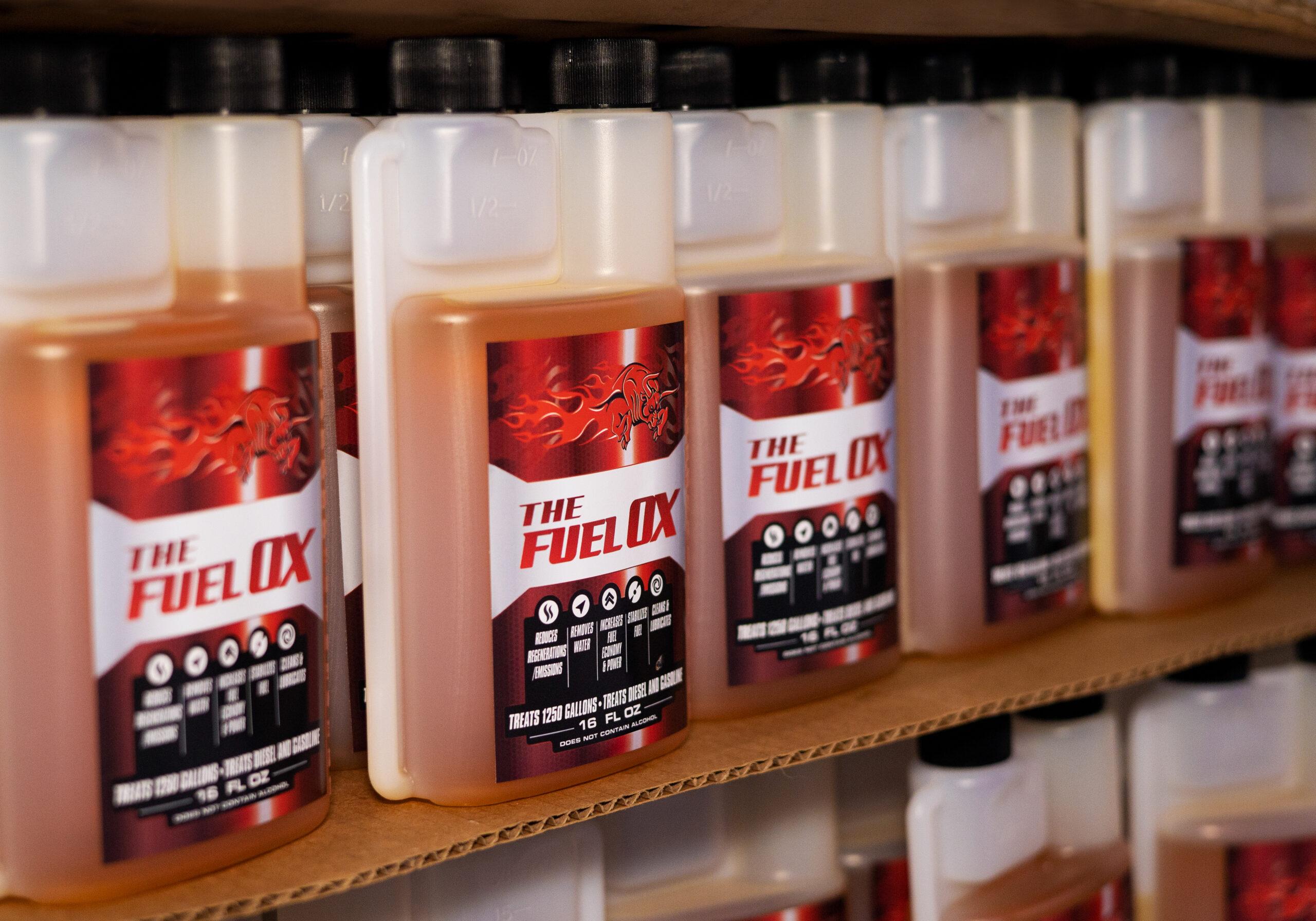
Reading a report tells you what is wrong, but you still have to fix it. That is where Fuel Ox® comes in. Fuel Ox® with Combustion Catalyst is built to tackle many of the exact problems a test report flags. It boosts combustion and lubricity, disperses sludge and water, and includes a maintenance-level biocide to stop microbial growth in your tanks.
Operators using it report real results, from fewer DPF regens and longer fuel filter life to better fuel economy and smoother-running engines. For cold-weather trouble like a high CFPP, Fuel Ox® Cold Charge helps prevent gelling so your equipment keeps running through winter.
Reading Your Report With Confidence
Reading a diesel fuel test report comes down to a systematic approach. You find the governing specification, learn the report layout, understand what each property means, compare every result against its limit, and watch closely for both failures and borderline values. With practice, this routine becomes second nature, and you can catch fuel problems long before they reach the engine.
If you want a hand getting started, upload your own report as a PDF, image, or spreadsheet, and we can walk through it line by line together.
You do not have to sort through a confusing report on your own. If you have any questions about reading your diesel fuel test results, understanding a failed property, or choosing the right treatment to bring your fuel back within spec, just contact the team at Fuel Ox®.


