

News
The Complete Spring Marine Fuel Treatment Guide

Spring commissioning is one of the more satisfying rituals in boating. You pull the cover, check the systems, run through the checklist, and start looking forward to the season. But the fuel sitting in that tank since last fall deserves more attention than most boat owners give it, and the treatment program you put in place at the start of the season determines a lot about how reliably the engine runs through the end of it.
This is a complete guide to what marine fuel does over winter, what needs to happen to your fuel system before you put the boat back in service, and how to treat it correctly going forward.
What Happens to Marine Fuel Over Winter
Fuel does not sit inertly. Over the months a boat spends out of the water, several things are happening inside the tank at once.
Ethanol-blended gasoline, which is what most recreational boaters are running, is particularly vulnerable to phase separation. Ethanol attracts moisture. As the tank breathes through temperature cycles over a winter, condensation forms. When enough water accumulates, the ethanol and water separate from the gasoline and sink to the bottom of the tank as a distinct layer. That layer is what gets drawn into the fuel system first on startup, and it causes rough running, corrosion in the fuel lines and carburetor, and in some cases complete engine failure.
Diesel marine fuel faces a different set of problems. Diesel degrades through oxidation over time, forming gum, varnish, and sediment that settles at the bottom of the tank. More seriously, any water in a diesel tank creates ideal conditions for microbial growth. Diesel bug, the informal name for bacteria and fungi that colonize the fuel-water interface, produces a dark sludge that clogs filters and injectors and introduces acids that corrode metal fuel system components. A tank that looked clean when you laid the boat up in October can have a serious contamination problem by April.
For a thorough breakdown of the problems marine fuel faces and what causes them, marine fuel: the problems and the solutions covers the full picture.
Step One: Assess What You Are Working With
Before you treat anything, know what you have. If you added a quality stabilizer like Fuel Ox Marine Winter Shock before laying up, your fuel is in significantly better shape than if the tank sat untreated. Winter Shock keeps fuel stable for up to two years and prevents the degradation that makes untreated stored fuel a problem at startup. If you used it, you are starting the season ahead.
If the tank sat without stabilizer, pull a fuel sample from the bottom of the tank and look at it. Clear diesel with no haze or sediment is usable. Hazy diesel, fuel with visible sediment, or anything that smells notably different from fresh fuel should be addressed before you run the engine. On the gasoline side, fuel that has been sitting for more than six months without stabilizer is likely degraded enough to cause problems and should be diluted with fresh fuel or removed entirely.
Check your primary and secondary fuel filters. If they are showing any discoloration, black streaks, or visible sludge, that is a sign of microbial contamination that needs to be addressed at the tank level, not just the filter.
Step Two: Treat the Tank Before the First Run
The first tank of the season is the highest-risk fuel event of the year. Whatever settled to the bottom over winter gets stirred up when fuel starts moving through the system again. This is the moment you want a strong detergent and dispersant working in your fuel, not after the injectors are already fouled.
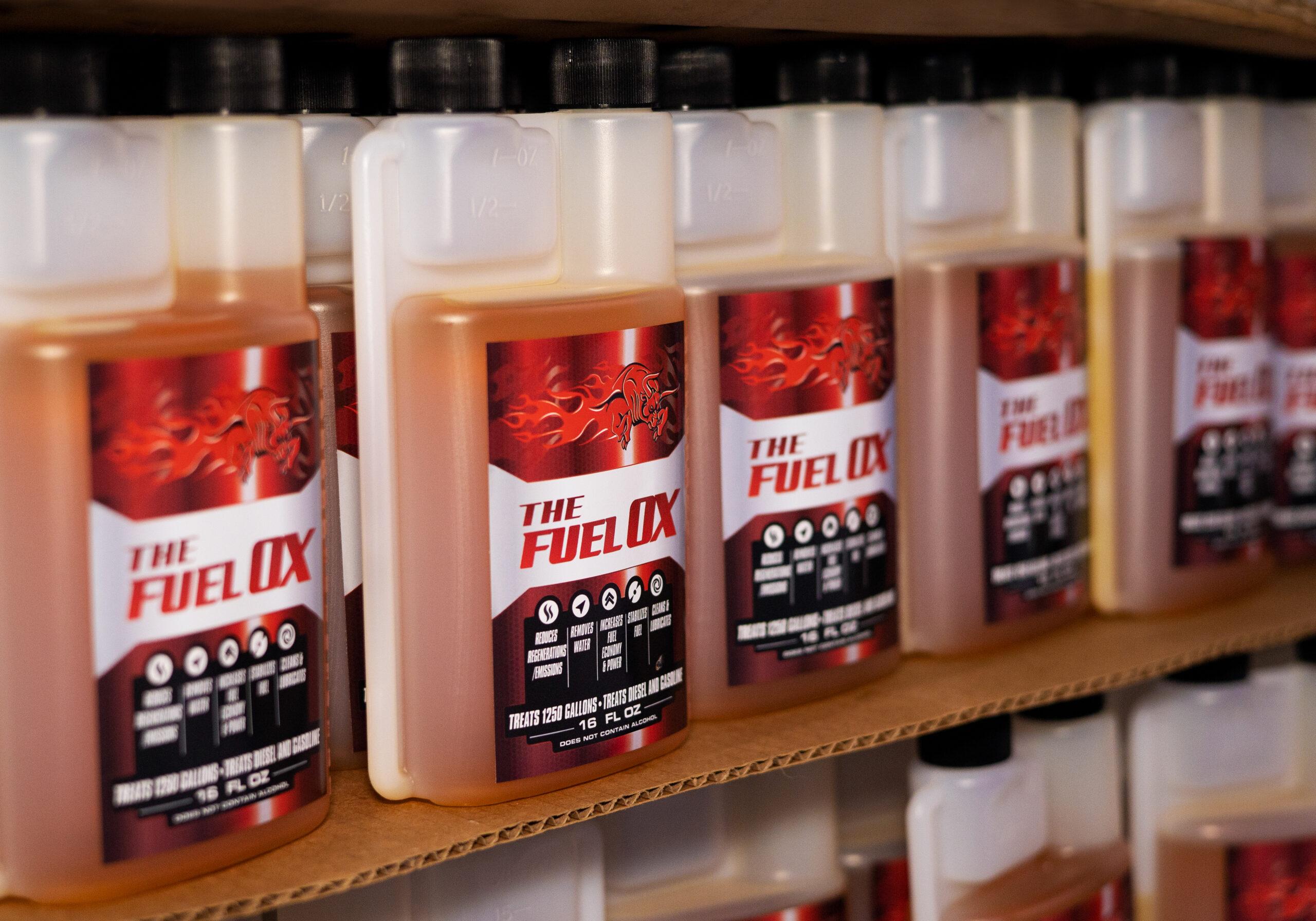
Fuel Ox Marine with Combustion Catalyst is built for exactly this application. It contains a dispersant and detergent package that breaks down sludge, varnish, and carbon deposits throughout the fuel system, a maintenance-level biocide that addresses microbial contamination in the tank, and a patented combustion catalyst that improves how completely the fuel burns. Add it to the tank before the first fill-up of the season so it mixes with fresh fuel and goes to work on everything the winter left behind.
If your tank inspection revealed active contamination, a heavier biocide treatment may be warranted before you run the boat. Treating a confirmed microbial problem with a maintenance-level dose will slow it but not eliminate it. Get the contamination under control first, then move to a maintenance program.
Step Three: Flush and Replace Filters
No amount of fuel treatment substitutes for starting the season with clean filters. Replace your primary fuel filter and water separator before the first extended run. This is true even if the filters look clean on inspection. Filters that have been sitting with degraded fuel passing through them for a winter pickup cycle accumulate material that does not always show until you are underway.
On diesel engines, inspect the injectors for any signs of fouling. Hard starting, rough idle, or visible black smoke on acceleration at the start of the season often traces to injector deposits that built up during the winter layup or during the first cold starts of spring. Running a quality detergent additive through the first few tanks usually resolves mild fouling. Severe fouling may require professional cleaning.
Step Four: Address the Ethanol Problem Directly
If you are running gasoline and your marina carries E10 or higher ethanol blends, ethanol management is not a one-time event at the start of the season. It is an ongoing part of your fuel program.
The practical steps are consistent: use a fuel treatment that displaces water and prevents phase separation every time you fill up, try to keep the tank as full as practical when the boat is not in use to limit the air space available for condensation, and be aware that the risk of phase separation increases significantly if the boat sits for more than a few weeks without being run.
Why fuel treatments are important for boats goes deeper on what ethanol does to marine fuel systems and why consistent treatment matters more in a marine context than in almost any other application.
Step Five: Set Up Your Season-Long Treatment Program
The mistake most boat owners make is treating fuel problems reactively. They deal with a fouled injector or a clogged filter and then go back to running untreated fuel until the next problem. The operators who have the fewest fuel system issues are the ones who treat every tank.
The math is straightforward. Fuel Ox Marine with Combustion Catalyst is a highly concentrated treatment. The cost per tank is a fraction of what a single injector cleaning or filter replacement costs, and it delivers a combustion catalyst that improves fuel economy, reduces carbon buildup, and extends the service life of the entire fuel system. For boats that run seasonally and sit for extended periods, it also provides the stability and biocide protection that prevents the tank from becoming a problem again by the time fall layup comes around.
For commercial operators and workboat operators running diesel year-round in demanding marine environments, the full Fuelox marine product line includes targeted solutions for heavy fuel oil, high-hour engines, and vessels operating in conditions where fuel quality and engine reliability are directly tied to operational continuity.
What Spring Treatment Actually Accomplishes
Done correctly, spring marine fuel treatment does four things. It clears out what winter left in the tank and fuel system before it causes a problem. It gives the engine the best possible fuel to work with on the first runs of the season when it is most vulnerable to deposit-related issues. It establishes a baseline of fuel system cleanliness that makes the rest of the season more reliable. And it protects the tank from the contamination and degradation that would otherwise accumulate all over again before next fall.
The boat gets launched once a year. The fuel system deserves the same level of attention as the hull, the engine oil, and the running gear. Start the season right and it runs right all the way through.
Ready to take control of your fuel strategy? Whether you’re looking to reduce costs, improve operational efficiency, or gain better visibility into your fuel usage, Fuelox provides tailored solutions designed to deliver measurable results.


