

News
Construction Season Fuel Management: How to Protect Equipment Running 10+ Hours a Day

A pickup truck running a highway route and an excavator grinding through a construction season are not the same problem. The truck covers miles. The excavator turns hours. It runs under sustained load in dusty, contaminated environments, burns diesel at high rates without the benefit of highway speeds to clean the exhaust system, and it does this day after day for months with no real break in the cycle.
The fuel management practices built for on-road equipment do not fully translate to heavy construction iron. The duty cycle is different, the failure modes are different, and the cost of a breakdown is different. A truck that breaks down on the road is an inconvenience. An excavator that goes down mid-dig can stop a job, trigger delay penalties, and tie up a rental or replacement machine at peak-season rates.
Here is how to think about fuel management for construction equipment running serious hours.
What High-Hour Operation Does to a Diesel Engine
The issues that accumulate over a construction season are not dramatic. They are slow and incremental, which is why they catch operators off guard. By the time something obvious fails, the underlying problem has usually been building for weeks.
Extended high-load operation produces more soot than highway driving does. Construction equipment spends a large portion of its operating time at low speeds, high throttle, and variable load, which is exactly the profile that generates the most particulate matter per gallon burned. That soot loads the DPF faster, triggers more active regeneration cycles, and if regen cycles are being cut short by the demands of the job, it accelerates the path to a forced regen or a plugged filter.
Dust and contaminated air compound the injector wear picture. Air filtration on construction equipment is engineered for the environment, but it is not perfect. Injectors running in high-cycle, high-load conditions in abrasive air are working harder than injectors on a highway truck, and the precision tolerances that make modern common rail injectors effective are vulnerable to the kind of gradual wear that untreated ULSD accelerates. Modern ultra-low sulfur diesel has very little natural lubricity, which means the injector pump and injectors themselves are running without much protection unless a lubricity additive is in the fuel.
Heat is the third factor. Equipment running 10-plus hours a day in summer conditions generates sustained thermal stress on fuel system components, seals, and filters. Heat accelerates fuel oxidation in the tank, particularly in bulk storage tanks that are sitting in direct sun between fills.
The Bulk Storage Problem
Most construction sites run on bulk diesel delivered to a field tank or a service truck. This is practical and efficient, but it introduces a fuel management variable that individual trucks rarely deal with: fuel sitting in a tank in varying conditions, sometimes for extended periods, being drawn down and refilled irregularly.
Bulk diesel in a field tank is exposed to temperature cycling, condensation, and in warm weather, accelerated oxidation. If the tank is not properly maintained, water accumulates at the bottom, microbial growth follows, and every machine filling from that tank gets a dose of degraded fuel along with the diesel. The filter is the first thing that catches it, but filters have limits, and a contaminated bulk supply will run through them faster than scheduled intervals account for.
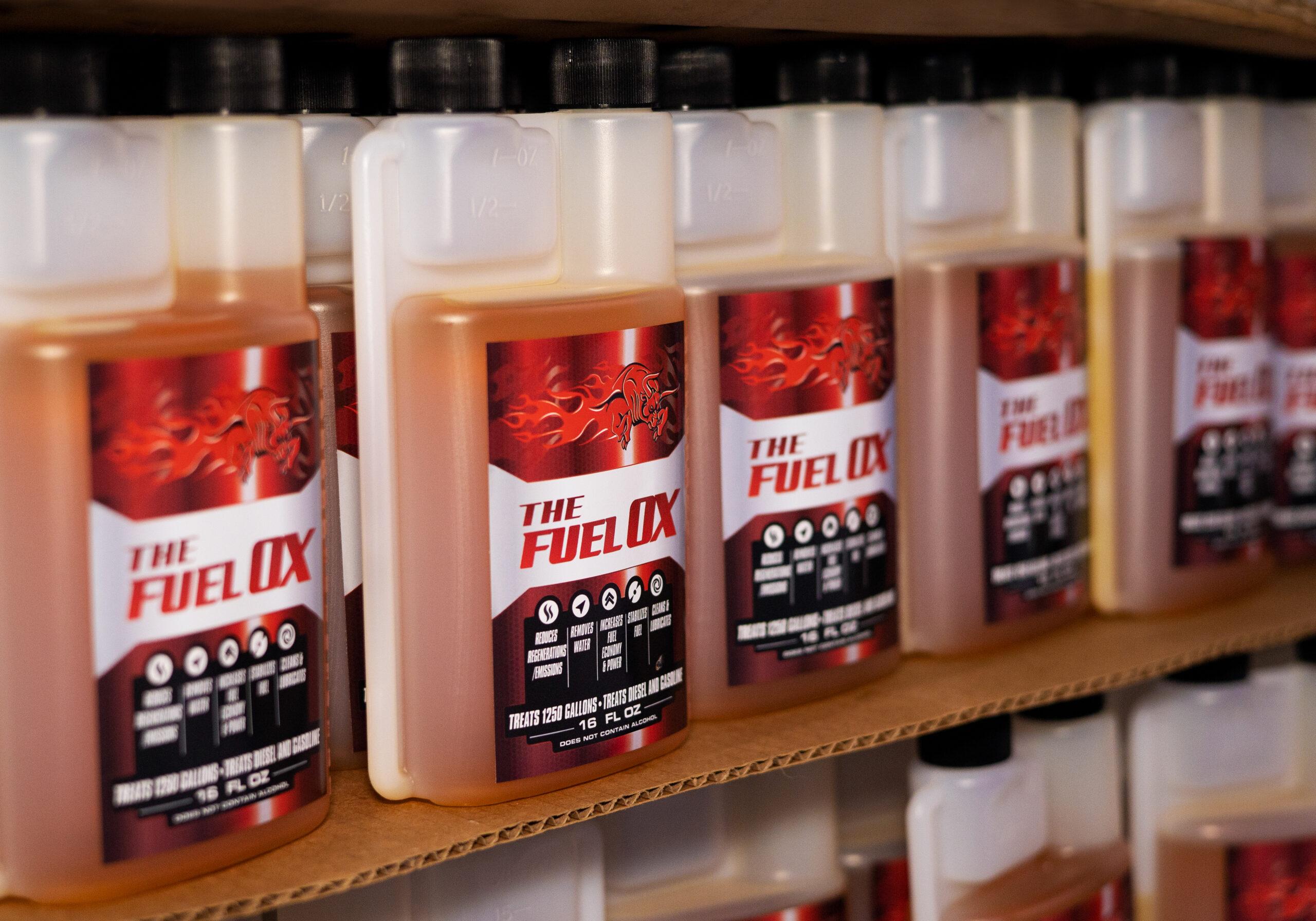
Treating bulk storage at the point of fill rather than at the machine level is the more efficient approach on a construction site. Adding Fuel Ox with Combustion Catalyst to the bulk tank when it is filled keeps the fuel stabilized, controls microbial growth with a maintenance-level biocide, and ensures every machine drawing from that tank gets treated fuel without requiring individual treatment at each fill. The treat ratio is 1:10,000, which means the cost per gallon is measured in fractions of a cent.
DPF Management Under Construction Conditions
The DPF is the component most likely to cause unplanned downtime on modern construction equipment, and the operating profile of a construction site is about as hard on a DPF as any environment outside a mine.
Low-load idling during operator breaks and shift changes keeps exhaust temperatures below the threshold for passive regeneration. Variable load cycles from digging, lifting, and grading do not sustain the consistent high-temperature exhaust needed to keep the filter clean passively. And the high particulate output of sustained high-load diesel operation means the filter fills faster than it would on a truck covering highway miles.
The practical result is that active and forced regeneration cycles happen more frequently on construction equipment than most operators plan for, and interrupting them, which happens constantly on a busy job site when the machine needs to move, accelerates the accumulation of unburned ash that eventually requires physical cleaning.
Fuel treatment directly affects this equation. More complete combustion produces less soot per gallon burned, which reduces the particulate load entering the DPF and extends the interval between regeneration cycles. The difference between treated and untreated fuel in a high-hour construction diesel is not theoretical. It shows up in regen frequency, in DPF cleaning intervals, and in the DEF consumption numbers. What is DPF clogging covers the mechanics of how that buildup happens and what the recovery looks like when it has been allowed to progress.
Injector Protection at High Duty Cycles
Common rail injectors on modern construction equipment operate at very high pressures and very tight tolerances. The spray pattern that determines combustion quality depends on injector tip condition, and that condition degrades over time through a combination of mechanical wear and deposit buildup.
ULSD does not provide the lubrication those injectors need to maintain tolerance over a high-hour season. A quality lubricity additive in the fuel reduces wear at the injector tip and in the high-pressure fuel pump. A detergent package keeps deposit formation on the injector tip controlled so the spray pattern stays accurate. Both of these functions are built into Fuel Ox with Combustion Catalyst, which is why it works as a complete fuel system treatment rather than a single-function additive.
For construction companies skeptical about whether fuel additives actually deliver a return in real-world conditions, do fuel additives really work addresses that directly with the evidence behind what a quality product actually does and does not accomplish.
Lubrication Beyond the Fuel System
A construction machine running long hours in abrasive conditions needs more than treated fuel. The chassis, swing bearing, bucket pins, and track components are all subject to accelerated wear in dusty, wet, and contaminated environments. Standard greases wash out or break down faster under these conditions, and re-greasing intervals that work in light-duty applications are not adequate for equipment running at construction site intensity.
Fuel Ox Infinity Lube Super Grease is engineered for exactly these conditions. It provides extreme pressure protection, resists water washout, and lasts significantly longer than conventional greases under high-load and high-contamination operating conditions. For a machine running 10-plus hours a day in the field, the lubrication program is as much a part of the maintenance picture as the fuel treatment program.
Building a Site-Level Fuel Program
The difference between reactive and proactive fuel management at the construction site level is mostly a matter of where you address problems. Reactive management replaces filters, cleans injectors, and services DPFs after they cause downtime. Proactive management treats the fuel at the bulk tank, monitors filter condition on a schedule, and runs a combustion treatment that reduces the rate at which those downstream problems develop.
The cost of the proactive approach is predictable and low. The cost of the reactive approach is unpredictable and high, particularly during peak season when equipment availability is directly tied to project timelines.
Treat the fuel at the bulk tank. Replace filters on schedule rather than on failure. Run a quality combustion treatment through every machine on the site. These are not complicated steps. They are the difference between a construction season where the equipment runs and one where it does not.
Ready to take control of your fuel strategy? Whether you’re looking to reduce costs, improve operational efficiency, or gain better visibility into your fuel usage, Fuelox provides tailored solutions designed to deliver measurable results.


