

News
What is Ultra-Low Sulfur Diesel?

Ultra-low sulfur diesel, usually shortened to ULSD, is diesel fuel that contains 15 parts per million of sulfur or less. That single number separates ULSD fuel from every diesel grade that came before it. Sulfur occurs naturally in crude oil, so removing nearly all of it takes deliberate work during the refining process.
The push for cleaner fuel came from two directions at once. Burning sulfur creates harmful emissions that damage air quality, public health, and the wider environment. Sulfur also destroys aftertreatment hardware, the exhaust cleanup equipment that emissions standards now require on a modern engine.
Cleaner fuel solved both problems and made today’s advanced emission control technologies possible. It also changed what fuel maintenance looks like, which is why Fuel Ox® has spent years formulating additives around the properties of low-sulfur fuel.
Understanding what ULSD is makes it easier to see which of those fuel issues are worth your attention.
Key Takeaways
- ULSD is diesel fuel with 15 parts per million of sulfur or less.
- That is a sulfur reduction of more than 99 percent from legacy diesel.
- Sulfur was removed because it pollutes the air and destroys emissions hardware.
- Clean fuel had to come first so engines could use particulate filters and SCR.
- ULSD is the default pump fuel across North America and Europe, so no action is needed.
- Fuel Ox® additives manage what ULSD cannot: lubricity, water, and filter-clogging sludge.
The 15 PPM Sulfur Standard Explained
Parts per million describes a very small amount of something inside a much larger amount. At 15 ppm, no more than 15 pounds of sulfur exist in one million pounds of fuel. For a smaller example, that works out to roughly 15 drops of sulfur in a 13-gallon fuel tank.
Regulators chose 15 ppm rather than zero for practical reasons. Sulfur is chemically bound into crude oil, and pulling out the last traces gets harder and more expensive with each step down.
Below roughly 15 ppm, the added cost and energy use stop buying meaningful reductions in diesel emissions or hardware protection.
Refineries reach the limit through hydrotreating. Diesel is combined with hydrogen and passed over a catalyst under high heat and pressure. Sulfur compounds react with the hydrogen and leave as hydrogen sulfide gas, which the refinery captures and converts into elemental sulfur sold for other industrial uses.
The same step also breaks down heavy hydrocarbons and removes other contaminants.
One point gets misread often: 15 ppm is a ceiling, not a target. Refiners build in a safety margin, so fuel at the pump frequently tests well under 15 ppm. In the United States, the governing specification is ASTM D975, which sets limits for sulfur alongside cetane number, flash point, lubricity, and about a dozen other properties.
Sulfur Content Compared Across Diesel Grades
| Grade | Sulfur limit | Status today |
| Ultra-low sulfur diesel (ULSD) | 15 ppm maximum | Standard highway diesel fuel |
| Low sulfur diesel fuel (LSD) | 500 ppm maximum | Largely phased out for on-road use |
| Traditional diesel (high sulfur) | Up to 5,000 ppm | No longer sold for on-road use |
Compared with that legacy fuel, ULSD represents a sulfur reduction of well over 99 percent.
How to Read the Label at the Pump
In the United States, diesel dispensers carry a label that reads close to Ultra-Low Sulfur Diesel (15 ppm Sulfur Maximum). You will usually find it on the face of the dispenser near the nozzle or grade selector. Many stations place diesel on the same island as gasoline, so read the label rather than assuming by position.
If a pump has no label, or the wording is vague, ask the attendant before fueling. This matters most at marinas, farm co-ops, and construction supply yards, which may also sell fuel intended for off-road diesel engines.
That fuel is often red-dye diesel, and the dye marks its tax status rather than its sulfur level, so color alone tells you nothing about the grade.
Why Sulfur Is Removed From Diesel Fuel
Air Quality and Public Health
Sulfur does not disappear when it burns. It leaves through the tailpipe, and the effects show up in the air we breathe.
- Sulfur dioxide: Burning sulfur creates sulfur dioxide, which reacts in the atmosphere to form the acids behind acid rain and adds to regional haze.
- Particulate matter emissions: Sulfur compounds help form the fine soot that diesel engines were long known for, so cutting sulfur cuts particulate output.
- Respiratory irritants: Sulfur dioxide and fine particulates irritate the lungs and airways, and they hit hardest for people with asthma and similar conditions.
Protecting Emissions-Control Equipment
The second reason is mechanical. Sulfur poisons the catalysts inside catalytic converters, coating the active surfaces that convert nitrogen oxides and unburned hydrocarbons into harmless gases. Poisoned catalysts lead to permanent losses in conversion efficiency, and sulfur compounds also form acids in the exhaust stream that encourage corrosion.
Sulfur fouls diesel particulate filters as well. A DPF traps soot and then burns it off during a regeneration cycle. High sulfur fuel loads the filter with ash and sulfur residue that will not burn away, which interferes with regeneration and can eventually plug the filter.
Advanced emission control systems simply cannot survive on high-sulfur fuel, and the hardware would degrade in months rather than years.
The Regulatory Chain Reaction
That hardware dependency set the order of events. Nearly every strategy engineers use to reduce diesel emissions runs through exhaust aftertreatment, so the fuel had to be cleaned up before the engines could be redesigned.
The EPA’s highway diesel program did exactly that. Refiners began producing 15 ppm fuel in June 2006, and the phase-in ran through 2010, when all highway diesel had to meet the limit. Engine rules were timed to follow: particulate filters arrived with the 2007 model year, and full nitrogen oxide controls such as selective catalytic reduction landed by 2010.
More stringent regulations covered nonroad, locomotive, and marine fuel from 2007 to 2012: 500 ppm in 2007, 15 ppm for nonroad equipment in 2010, and 15 ppm for locomotive and marine engines in 2012.
Because the U.S. rules guaranteed fuel with lower sulfur content nationwide, manufacturers could finally warranty sulfur-sensitive hardware. The trucks, buses, and pickups sold today are the direct result. Under today’s diesel standards, a new engine emits over 90 percent less particulate matter and nitrogen oxides than a pre-2007 model.
Does ULSD Affect Engine Performance?
For nearly every driver, the honest answer is no. Power, throttle response, and fuel economy are not meaningfully different in normal driving. If you switched without being told, you would not notice from behind the wheel.
Energy content per gallon drops very slightly during hydrotreating, but the difference disappears into ordinary variation from weather, load, and driving style.
The Lubricity Question
Diesel lubricates parts of the injection system as it flows through, and some of that quality historically came from sulfur compounds. Removing them does reduce natural lubricity a little, which matters for high-pressure pumps and injectors.
It is also a solved problem. Refiners add lubricity improvers so finished fuel passes the ASTM D975 lubricity test before it reaches a pump. Drivers do not need to correct for it, and aftermarket lubricity additives are generally unnecessary in a healthy modern engine.
Cetane, Biodiesel Blends, and Diesel Grade Names
Three related terms cause more confusion than sulfur itself.
- Cetane number measures how readily fuel ignites, not how clean it is. ASTM D975 sets a minimum of 40, and premium blends often reach 45 to 50. Cetane and sulfur are separate properties.
- Biodiesel blends up to B20, meaning 20 percent biodiesel, are approved by most engine makers and are also ULSD. Biodiesel actually improves lubricity.
- “#2 diesel” describes the distillate grade and thickness of the fuel, not its sulfur level. The full name of what comes out of a highway pump is Grade No. 2-D S15, so #2 diesel and ULSD are the same fuel today.
On price, ULSD costs a few cents more per gallon to produce than legacy fuel did, because hydrotreating consumes hydrogen and energy. That gap is now built into the baseline price of diesel.
Vehicle Compatibility
ULSD is compatible with virtually all modern diesel vehicles, and it is required for any engine with aftertreatment hardware. Many older diesel engines also run on it with no modification at all.
A small number of very old engines built around high-sulfur fuel may benefit from an additive. Check the owner’s manual or contact the manufacturer first. If the manual does not call for one, the additive is usually wasted money.
Situations That Require No Action At All
You can fuel up and move on without thinking about sulfur if you have:
- A diesel pickup, SUV, or passenger car built in the last two decades
- A late-model heavy-duty truck, delivery van, or transit bus
- Any vehicle with a diesel particulate filter or an SCR system that uses diesel exhaust fluid
Across North America and Europe, ULSD is the default fuel rather than a specialty product. There is nothing to opt into.
Where Ultra-Low Sulfur Diesel Is Used
ULSD is the standard on-road diesel fuel across the United States, Canada, the European Union, the United Kingdom, Japan, Australia, and a growing list of other regions. Pull into a normal highway or urban filling station in these markets, and the diesel pump is dispensing ULSD.
Off-road, marine, and agricultural supplies are a partial exception. U.S. requirements now cover nonroad equipment, but higher sulfur grades still appear in some markets and in large marine applications, where the international cap sits far above 15 ppm.
Driving south is where this turns practical. Mexico’s ULSD rollout has been uneven outside the border states and the main highway corridors, and supply across Central and South America varies considerably by country and even by station.
If you are an owner-operator running freight south or an RV driver headed past the border zone, confirm the local fuel specification before filling a DPF-equipped or SCR-equipped vehicle. A few tanks of high-sulfur fuel can plug a filter or poison a catalyst, and that repair is often excluded from warranty coverage.
Choosing and Storing ULSD Correctly
Buying Considerations
Sulfur content is standardized, so where you buy does not change it. What can change is freshness and handling.
- Turnover: Busy stations taking frequent deliveries from tanker trucks move fuel through their tanks faster, which means fresher fuel.
- Water and microbes: Water collects in storage tanks and supports microbial growth, producing sludge that clogs filters. This is a tank maintenance issue, not a sulfur issue.
- Winter blends: In cold climates, diesel is blended or treated to keep flowing at low temperatures. That is a separate variable from sulfur content.
Long-Term Storage Notes
All diesel degrades over time regardless of sulfur level. Oxidation forms gums and sludge, temperature swings drive condensation into the tank, and moisture opens the door to microbial growth and corrosion.
For farm tanks, fleet storage, and standby generators where uptime is mission-critical, stabilizers slow oxidation and biocides address contamination once water control alone is not enough. Inspection, water draining, and fuel testing matter more than any additive.
Follow the equipment manufacturer’s guidance, since warranty terms often specify which products are approved.
Getting More Out of Every Tank of ULSD
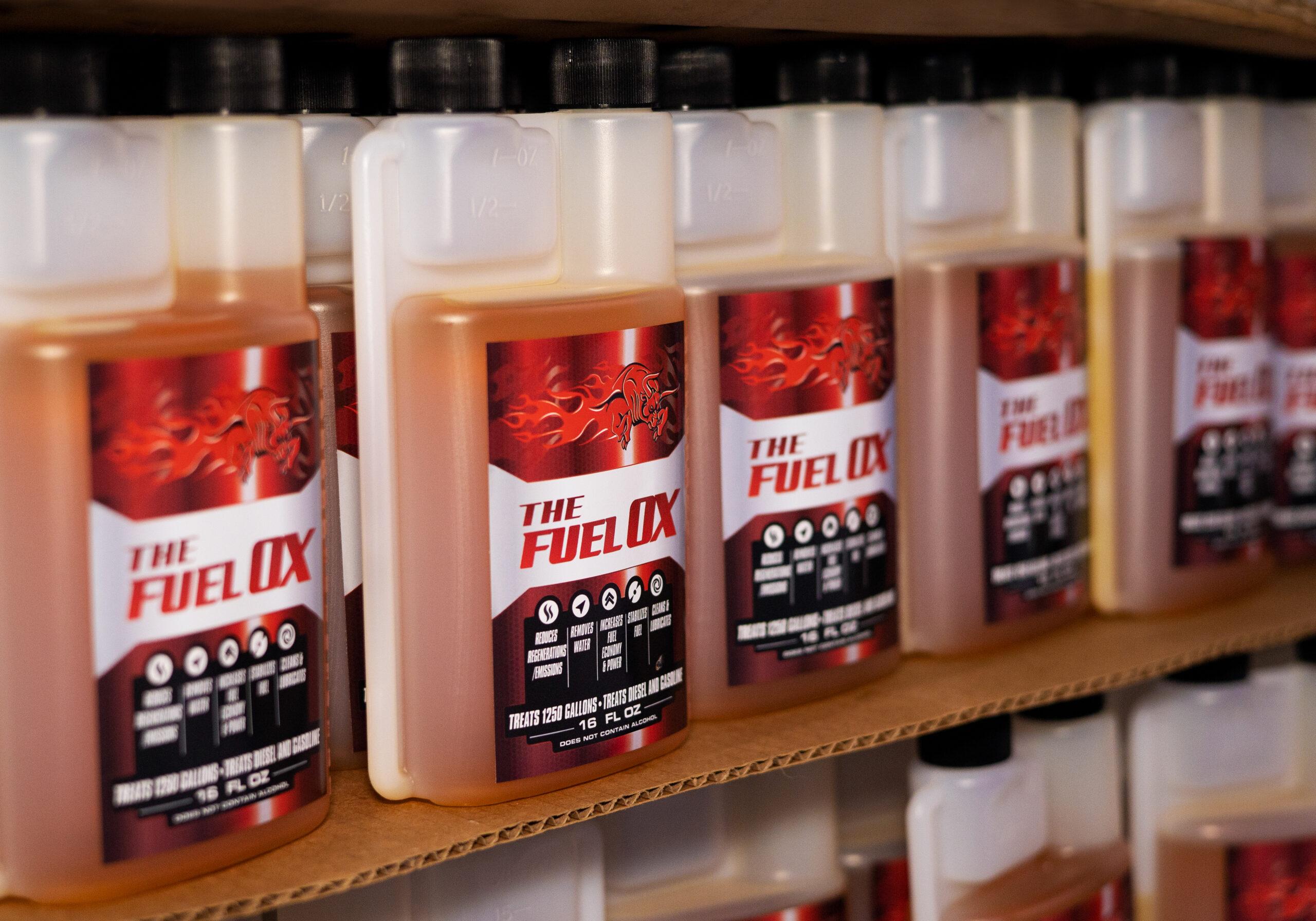
ULSD itself does not need fixing, but the conditions around it are worth managing. That is where Fuel Ox® comes in. Our all-season fuel additives are built for the realities described above: replenishing lubricity lost when sulfur was removed, dispersing water and controlling the sludge that plugs filters, and promoting more complete combustion so DPF regenerations happen less often.
For fleets, standby generators, and owner-operators, that shows up as fewer filter changes and less downtime. A single ounce treats roughly 80 gallons of fuel, so the cost per tank stays low.
Is ULSD the Right Fuel for Your Diesel?
For any diesel built in the last twenty years, yes, and no decision is required. At the pump, glance at the label to confirm the grade, then fuel and go. Save your diligence for the cases that call for it: crossing into a region without a ULSD mandate, filling from an unlabeled or non-retail source, or storing fuel for months.
Reach for the owner’s manual only when you are running an older engine or weighing an additive, because that is where the answer will be.
If you have questions about treating ULSD in your truck, equipment, or storage tank, contact us and we are happy to help.


