

News
Will Fuel Injector Cleaner Fix a Misfire?

Fuel injector cleaner will fix a misfire only when a dirty or partly clogged injector is what caused the misfire in the first place. In that case, a quality PEA-based cleaner can restore the injector’s spray pattern, and the misfire goes away.
If anything else is behind it, whether ignition, compression, vacuum, timing, or sensors, a bottle of additive will not touch it.
It is a fair question, because a dirty injector looks a lot like half a dozen other faults from the driver’s seat. Injector cleaner is a narrow fix rather than a general misfire cure, and its low cost is what makes it tempting as a first move.
At Fuel Ox®, we formulate fuel additives for everything from passenger cars to commercial fleets, so this is a question we field constantly. Cleaner is worth using, but it works best when you already know what you are treating.
Key Takeaways
- Cleaner fixes a misfire only if dirty injectors caused it.
- Most misfires trace to ignition, compression, vacuum, or sensor faults.
- Deposit misfires are usually mild and intermittent and worst at idle.
- Direct-injection engines get far less benefit from a bottle.
- Read the codes first, and park the car if the light flashes.
- Fuel Ox keeps injector tips clean so deposits stay away.
The Short Answer
Fuel injector cleaner treats one root cause: deposit buildup that distorts an injector’s spray pattern. The goal is to clean fuel injectors well enough to restore proper spray and nothing beyond that. If deposits are not the reason your engine is missing, cleaner changes nothing, and the misfire stays exactly where it was.
Put another way: injector cleaner is a maintenance product, and pouring it into a car with an active misfire asks a maintenance product to do a repair job.
How a Clogged Injector Causes a Misfire
What the injector is supposed to do
A fuel injector has one job, and it does it thousands of times a minute: spray a measured amount of fuel into the intake port or straight into the cylinder, and break that fuel into a fine mist on the way out.
Volume matters, but atomization matters just as much. Fuel that leaves the nozzle as a mist mixes with air and burns cleanly. Fuel that dribbles or streams out does not mix well, and poorly mixed fuel burns poorly.
What deposits change?
Carbon and varnish collect in two places. Inside the nozzle openings, deposits narrow the passage and cut flow volume. On the outside of the tip, they break up the spray cone, so you get streams and drips instead of a proper spray.
Light deposits may only cost you a little gas mileage, some power, and a bit of throttle response. Heavier buildup leaves that cylinder running lean, mixing badly, or both, so combustion is incomplete or does not happen at all.
String enough of those together and the engine computer flags a misfire. Most drivers feel it first as hesitation when accelerating, surging at a steady cruise, and falling mileage.
Why it usually shows up as a rough idle first
At idle, the injector stays open for the shortest time in its whole operating range, so a small loss of flow is a large percentage of what the cylinder was supposed to receive. Open the throttle and pulse width climbs, and the extra open time can partly cover for a restricted injector.
That is why deposit-related misfires come and go: rough at a stoplight, smooth once you are moving.
When Fuel Injector Cleaner Is Likely to Help
Cleaner has a genuine chance when the picture looks like this:
- The misfire is mild or intermittent. Coming and going fits a partial restriction rather than a failed part.
- The vehicle sat for a long stretch. Gasoline breaks down over months and leaves gum and residue in the injectors.
- The car has been running on cheap or low-detergent fuel. A weak additive package lets deposits build faster than the engine can clean them off.
- There is a known or suspected spray-pattern problem. Deposits on the tip change how fuel is delivered even when flow volume still looks acceptable.
- The engine runs rough, but nothing else checks out. No ignition faults, no leaks, no codes pointing anywhere specific.
Port injection versus direct injection
This distinction changes the answer, and most articles skip it. On a port-injected engine, fuel sprays at the back of the intake valves, so an in-tank additive washes the injector tips and the valves on its way through.
On a direct-injection (GDI) engine, the injector sprays inside the combustion chamber, and fuel never touches the intake valves. Cleaner still reaches the tip, but it cannot reach intake-valve carbon, which is the most common reason a GDI engine idles rough. Expect less from a bottle, because valve deposits need walnut blasting or a chemical intake service.
The realistic best case
Do not expect anything instant. A good cleaner needs time in the fuel system, so judge results over a tank or two. Better throttle response and a steadier idle are usually the first things you notice.
If the idle smooths out but never fully clears, that is a sign deposits were part of the problem but not all of it, and something else is going on alongside them.
When Fuel Injector Cleaner Won’t Fix Anything
This is the more common scenario. Here are the usual causes and why an additive cannot reach them:
- Bad spark plug or ignition coil. The fuel is arriving just fine, but there is no spark to light it.
- Vacuum leak. Unmetered air enters past the sensor, and a chemical cannot seal a cracked hose, split intake boot, or leaking gasket.
- Low compression. Worn rings, a burned valve, or a failed head gasket are mechanical, and nothing in a bottle restores sealing.
- Fuel pressure problems. A weak pump, failing regulator, or clogged filter starves every injector no matter how clean they are.
- An injector that failed electrically or mechanically. An open winding or a stuck pintle calls for injector replacement, not cleaning.
- Timing problems. If cam or crank timing has slipped, valve and piston events happen at the wrong moment.
- Sensor or wiring issues. A dirty or failing MAF sensor, a bad crank sensor, or a broken circuit makes the computer command the wrong amount of fuel, causing misfires that were never about fuel delivery.
The cost of guessing wrong
The obvious cost is money spent on additives while the actual fault keeps doing its thing. The higher cost is time. Raw fuel washing down a cylinder wall thins the oil film the rings depend on, so every week of hoping an additive works is a week of damage adding up.
How to Tell Which Situation You’re In
Start with the check-engine light behavior
A steady light means a fault is stored in memory. Get the code read first, since most parts stores pull codes for free and a basic scan tool costs less than a few bottles of additive.
A flashing light means stop driving. Flashing indicates an active, severe misfire dumping raw fuel into the exhaust, which can destroy the catalytic converter in short order. A converter is usually far more expensive than whatever caused the misfire in the first place.
Pull the codes before you pour anything in
P0300 is a random or multiple-cylinder misfire. P0301 is cylinder 1, P0302 is cylinder 2, and the numbering continues from there. There is real security in knowing that number before you spend a dime.
Pay attention to anything that comes along with it. Lean or rich bank codes, sensor codes, and fuel trim codes usually point away from a simple deposit problem and toward air, pressure, or electronics.
Read the pattern
If one cylinder is missing, focus on the parts unique to that cylinder: its plug, coil, injector, compression, and the vacuum path on that runner. If the misfire is random or moves between cylinders, look at shared systems instead: fuel supply and pressure, a large vacuum leak, timing, or an engine-wide sensor.
Conditions narrow it further. A misfire only when cold, only under load, or only at idle each points to a different short list. Write down what you notice, then spend a few minutes researching your engine specifically. Some platforms have well-known weak spots a mechanic will recognize immediately.
Quick checks that cost nothing
- Listen for a hiss around the intake, throttle body, and vacuum lines with the engine idling.
- Look for cracked plug wires, a loose or corroded coil connector, and brittle or disconnected vacuum hoses.
- Check the service history for spark plug and fuel filter intervals. Overdue maintenance is often the answer.
How to Use Fuel Injector Cleaner Correctly
This only matters once deposits are a credible suspect.
Choose a concentrated PEA-based cleaner rather than a light “fuel system” maintenance dose. PEA is the most effective chemistry for removing hardened deposits, and maintenance bottles are usually too weak for a car that already has symptoms. Heavier deposits require a heavier treatment.
Add it to a low fuel tank so the treatment stays concentrated, then fill up. Drive normally through that whole gas tank, and get some highway mileage in if you can, since sustained load and heat help the process.
Reassess when the tank is empty instead of stacking bottle after bottle. If a proper treatment did nothing, deposits were probably not your problem.
When to escalate to professional cleaning or replacement
Move on from additives when a correct treatment changes nothing, or when testing confirms a flow imbalance between injectors. The options then are on-vehicle cleaning, bench cleaning with flow testing, or replacing the injector that is out of spec.
Preventing Deposit-Related Misfires
- Buy fuel from high-volume stations that use adequate detergent additive packages.
- Run a maintenance dose of cleaner periodically to protect the injectors instead of waiting for symptoms.
- Do not let a vehicle sit for months with a partially full tank. Use a fuel stabilizer for planned storage.
- Keep the air filter and fuel filter on schedule so the injectors are not compensating for restrictions elsewhere.
- Address small drivability changes early, while they are still cheap to sort out.
Where Fuel Ox® Fits In
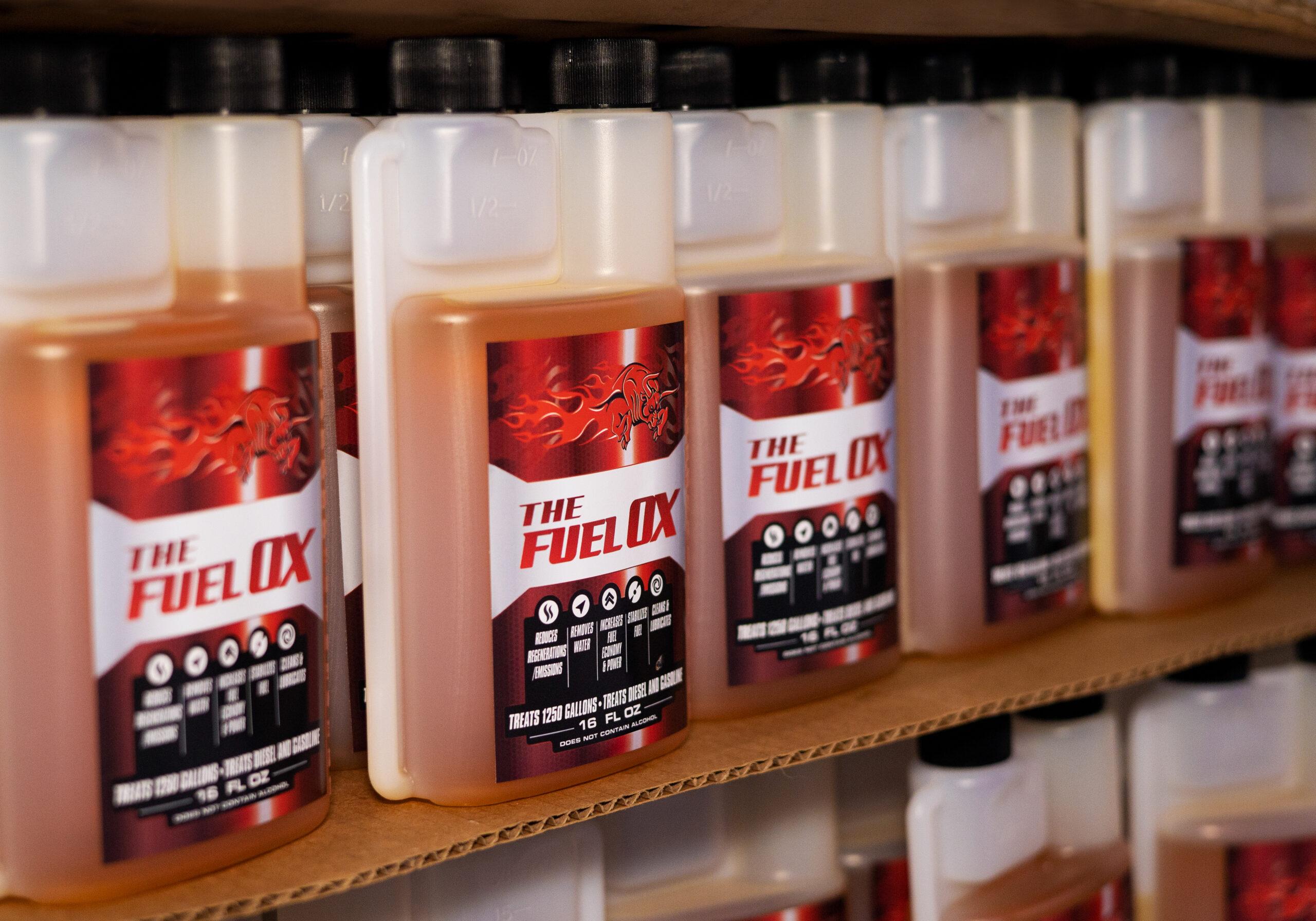
Once ignition, compression, and sensor faults are ruled out, the job becomes keeping deposits from building back up. Fuel Ox® with Combustion Catalyst is an all-season additive for gasoline and diesel engines, pairing detergents and dispersants with a patented combustion catalyst that promotes a more complete burn.
The detergent package keeps injector tips and sensors cleaner so spray patterns stay consistent and injectors last longer. One ounce treats up to 80 gallons, which makes a maintenance dose at every fill practical rather than something you remember after the engine runs rough.
The Bottom Line
Fuel injector cleaner is worth trying on a mild, intermittent misfire in a port-injected car with a plausible deposit history. It is inexpensive, low risk, and it occasionally restores performance outright. On a direct-injection engine, temper your expectations.
It is not a diagnostic step or a substitute for one. Read the code first, then decide. If your check engine light is flashing, park the car and diagnose it before driving any further.
Still unsure? Pair your specific code with your year, make, model, and engine when you talk to a shop or post on a forum. That combination, not the code list on this page alone, is what actually narrows the cause.
Have questions about whether a deposit treatment makes sense for your misfire or which Fuel Ox® additive suits your engine and the fuel you run? Contact us, and we will walk you through it.


