

News
How the Right Fuel Additive Keeps Your Fleet Running in Cold Weather

When temperatures drop, diesel fuel can bring an entire fleet to a stop. Finding the right fuel additive to keep my fleet running in cold weather is one of the smartest moves an operator can make before the season turns.
The problem starts with paraffin wax. Diesel contains wax that stays dissolved in warm weather, but as temperatures fall, that wax forms crystals that clog filters, restrict fuel flow, and eventually cause the fuel to gel. This diesel fuel gelling does not mean the fuel is bad. Cold simply pulls the wax out of solution, and your diesel engines feel it fast.
The cost of ignoring it adds up quickly. Gelled fuel starves the engine, so trucks fail to start or die on the road once filters plug. Across a fleet, one stranded vehicle turns into towing bills, overtime, unhappy customers, and costly downtime. The fleet managers hit hardest are the ones reacting to failures instead of preventing them.
That is why the right fuel additive matters. It is not a roadside rescue tool because once fuel has gelled, pouring something in does little. The real value comes from treating fuel before temperatures drop, so the wax never clogs anything.
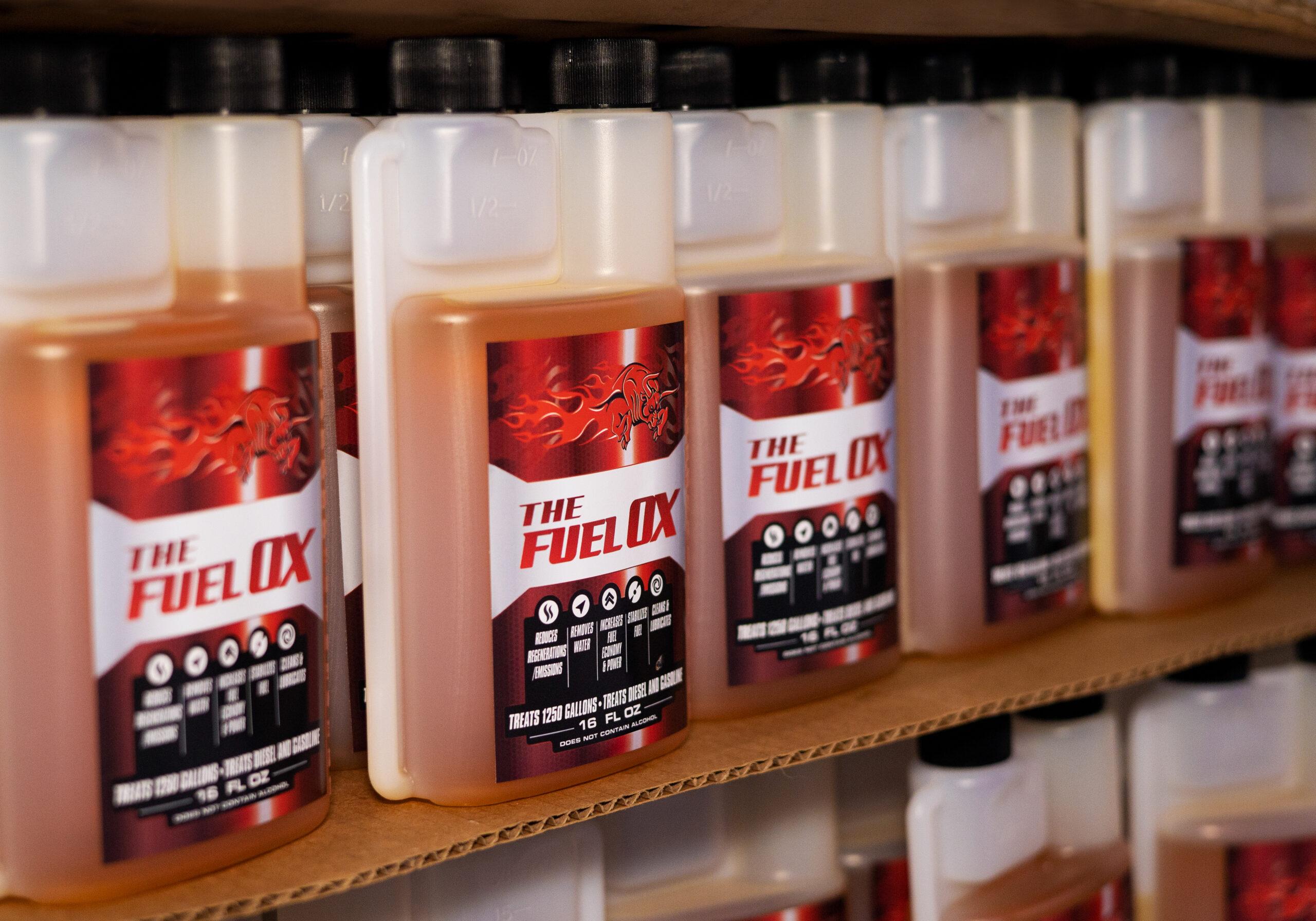
This is exactly where a purpose-built winter treatment like Fuel Ox® earns its place, protecting your fuel before the cold ever has a chance to shut a truck down. Prevention is cheaper and faster than thawing a frozen truck at 5 a.m.
Key Takeaways
- Diesel gels in cold weather when paraffin wax crystallizes and clogs filters.
- Treat fuel before temperatures drop, since additives can’t reverse gelling.
- Look for anti-gel, water control, cetane, and lubricity benefits.
- Fuel Ox® offers tiered protection from Cold Charge to Freeze Guard to Winter Max.
- Match the additive to your coldest night, your fuel, and how you fuel up.
- Use anti-gel products on diesel only, never gasoline.
What a Cold-Weather Fuel Additive Actually Does
A good cold-weather additive works by targeting the specific ways diesel fails in the cold. Rather than doing one broad thing, quality additives address several failure points at once.
They keep wax crystals small so they slip through filters instead of blocking them, which helps improve fuel flow. They manage water so it does not freeze and choke the fuel line, and they discourage microbial growth that can foul a fuel tank over time.
Some also improve how the fuel ignites, which helps with those brutal cold starts and even supports steadier fuel economy.
The right choice depends on two things: how cold your local climate really gets where your trucks run and which problems you are trying to solve. A fleet in a mild climate that only sees a few freezing nights has different needs than one running through sub-zero temperatures for weeks.
Buying the strongest additive on the shelf is not always the answer. Matching the product to your real conditions is what keeps money in your pocket and trucks on the road through the winter months.
Key Benefits to Look For in a Diesel Fuel Additive
Not every additive does the same job, so it helps to know what each ingredient brings to the table. When comparing products, look for these core benefits:
- Anti-gel (cold flow improver): Prevents wax crystals from clogging fuel filters as temperatures fall. This is the feature that matters most in serious cold, and it is your main line of defense to prevent fuel gelling. Many formulas work to lower the pour point so the fuel keeps moving in deeper cold.
- Water control: Disperses or removes small amounts of water so it does not turn into ice and restrict fuel flow, while also cutting down on the microbial growth that thrives where water sits in a fuel tank.
- Cetane improver: Supports better cold starts and smoother combustion, which reduces hard cranking on frigid mornings and protects engine life in the long run.
- Lubricity enhancer: Protects fuel injectors and pumps from wear and helps keep injectors clean, which is especially important with ultra-low sulfur diesel that has less natural lubrication built in.
Well-Known Diesel Fuel Additives for Winter Operation
Fuel Ox® builds a full line of winter diesel treatments so you can match the product to how cold your operation really gets rather than settling for a one-size-fits-all bottle. Each one targets the same core failure points covered above, but at different strengths.
- Fuel Ox® Cold Charge is the flagship winter treatment and the right starting point for most fleets. It is a two-in-one formula that pairs Fuel Ox® with Combustion Catalyst and Freeze Guard, so it prevents gelling and icing while also improving fuel economy by 7–10% and cutting DPF regens. It lowers the fuel’s pour point by 15°–20°F, restores lubricity lost in ULSD, and cleans injectors and fuel lines as it works. One gallon treats 7,500 gallons of fuel.
- Fuel Ox® Freeze Guard is the deep-cold anti-gel option, delivering military-grade winter protection. It prevents diesel gelling, removes water, and reduces the cold filter plugging point (CFPP) by up to 45°F, making it a strong choice when temperatures fall well below what a standard treatment can handle.
- Fuel Ox® Winter Max is the extreme-cold specialist. This super-concentrated formula prevents wax and ice blockages and reduces CFPP by 40°F or more, keeping diesel and heavier fuel oils flowing even in the harshest sub-zero conditions.
- Fuel Ox® Cold Charge OTR and Freeze Guard OTR bring the same protection in a convenient over-the-road size, so drivers can carry a bottle and treat at the pump. Cold Charge OTR lowers CFPP by over 33°F and stabilizes fuel for up to two years.
Every Fuel Ox® winter product is made in America and built around the same patented combustion catalyst, so you get cleaner combustion and fuel-system protection on top of cold-weather defense.
Fleets across trucking, transportation, mining, marine, and municipal operations rely on these formulas to prevent gelled fuel and costly downtime.
How to Match a Fuel Ox® Additive to Your Fleet
Choosing the right product is less about grabbing the strongest bottle and more about fit. Before you stock up, weigh these factors:
- Consider your coldest realistic night. For typical winter conditions, Cold Charge covers most fleets. As temperatures drop deeper, step up to Freeze Guard, and for extreme subzero operation, reach for Winter Max. Always choose protection rated a bit below your expected low for a safety margin.
- Factor in the diesel you are running, including whether your fuel supplier already blends in a winter treatment. Simple fuel testing at the station or in your shop confirms what you are actually getting per gallon and how much added protection you need.
- Match the format to how you fuel. Bulk sizes suit shops and storage tanks that treat fuel as it comes in, while the OTR bottles are sized for drivers to treat individually on the road.
Get these three things right, and the additive stops being a guess. It becomes a plan. When you know your engines, your fuel, and your coldest nights, you can operate with confidence and keep every truck moving for uninterrupted operations no matter how far the temperature drops.
Operating in Extreme Cold (Below -20°C / -4°F)
When temperatures drop below -20°C, the rules change. The steps that keep trucks running through a normal winter may not be enough once you hit these extreme lows.
At these subzero temperatures, wax forms faster and heavier, water freezes almost instantly, and even treated fuel can struggle if the treatment was not strong enough or added too late.
A dose that protects your fleet at -10°C might leave you stranded at -30°C. In our experience, the operators who make it through the worst cold snaps are the ones who plan for the coldest realistic night, not the average one.
Extreme cold punishes shortcuts, so this is where discipline and preparation pay off the most and where real winter protection is proven.
Best Practices for Extreme Cold Conditions
Surviving deep cold comes down to layering your defenses rather than relying on any single fix. Start with the fuel itself. Use winter-blended diesel supplied by your fuel provider, since this fuel is already treated for lower temperatures and often includes kerosene or a similar blend to lower pour point.
Building on that base with the right additive gives you a stronger margin than either step alone.
Timing is just as important as the products you choose. Treat your fuel before it reaches its cloud point, because once wax crystals begin forming, additives can no longer prevent what has already started. Keeping a few habits consistent through the cold months makes a real difference:
- Keep your tanks as full as practical, since empty space in a fuel tank collects moisture, and that condensation turns into ice, water, and microbial growth problems when temperatures crash.
- Replace fuel filters on schedule, because a filter that is already partially plugged with dirt or old wax will gel far faster and restrict fuel flow much sooner than a clean one.
Together these steps form a safety net. Winter fuel lowers your baseline risk, early treatment works to prevent gelling before it starts, full tanks fight moisture, and fresh filters help improve fuel flow. Miss one and the others have to work harder.
Cover all four, and your fleet stands the best chance of starting strong on the coldest mornings, protecting both cold-weather performance and long-term engine life.
What About Gasoline Vehicles in Your Fleet?
If your fleet mixes diesel trucks with gasoline vehicles, it is important to know that cold-weather fuel additives are not one-size-fits-all. Anti-gel additives are made for diesel and should never be poured into a gasoline engine.
Gasoline and diesel behave very differently, and a diesel treatment can throw off how gasoline burns, which may harm the engine or fuel system over time. The diesel fuel gelling problem that anti-gel products solve simply does not apply to gasoline the way it does to diesel.
The good news is that gasoline engines usually do not need cold-weather fuel additives at all. Gasoline does not contain the paraffin wax that causes diesel to gel, so it keeps flowing at temperatures that would freeze untreated diesel solid.
For your gas vehicles, standard seasonal care like a healthy battery, the right oil, and good maintenance matters far more than any fuel additive for cold-weather performance. Save the anti-gel products for the diesel side of your fleet, where they actually do their job.
Building a Cold-Weather Fuel Strategy for Your Fleet
The strongest defense against winter is not a single product but a plan that ties everything together. Additive selection, fuel sourcing, and maintenance are three parts of one system, and they work best when you treat them that way.
The right additive protects the fuel you have already sourced smartly from your fuel supplier, and both only pay off when your filters, tanks, and fuel injectors are maintained. When all three line up, cold weather stops being a yearly emergency and becomes a managed risk.
Timing is the other half of the strategy. Preparing ahead of the season beats reacting to the first hard freeze every time. Line up your winter fuel supply and additive stock before the temperature drops, and build your cold-weather maintenance into a schedule that starts before winter rather than during it.
Know your engines, source the right fuel, treat it on time, and keep up your maintenance. Do that, and the right fuel additive to keep your fleet running in cold weather becomes one dependable part of a fleet that keeps moving, no matter how cold it gets.
Have questions about which winter treatment fits your fleet, how to match protection to your coldest nights, or when to start treating before the season turns? The team at Fuel Ox® is here to help. Just reach out, and we will help you keep every truck running no matter how cold it gets.


