

News
What Is HVO and Can You Use Fuel Ox® With It?

Renewable diesel is quietly reshaping how fleets and equipment owners think about what goes in the tank. With companies hunting for cleaner ways to keep their trucks, generators, and machines running, we’re hearing the same question pop up more and more: what’s the deal with HVO fuel, and where does it fit?
Let’s walk through what HVO actually is, how it compares to biodiesel, and whether Fuel Ox® plays nicely with it.
Key Takeaways
- HVO is a renewable diesel made from vegetable oils, animal fats, and waste materials via hydrotreatment.
- Its chemical makeup closely mirrors petroleum diesel, making it a drop-in fuel for most existing diesel engines.
- HVO burns cleaner than traditional diesel, reducing particulate matter, NOx emissions, and visible smoke.
- It outperforms FAME biodiesel in cold weather and holds up far better in long-term storage.
- Not all HVO is equally sustainable, as feedstock sourcing plays a major role in its overall environmental benefit.
- Fuel Ox® pairs seamlessly with HVO, adding combustion, storage, and fuel system protection that HVO alone can’t provide.
What Is HVO (Hydrotreated Vegetable Oil)?
HVO, short for Hydrotreated Vegetable Oil, is a renewable diesel fuel made from vegetable oils, animal fats, and waste oils. It’s produced through a hydrogenation process called hydrotreatment, which uses hydrogen to convert these raw materials into a clean-burning fuel.
What really sets HVO apart from older biofuels like FAME biodiesel comes down to chemistry. HVO is built from paraffinic hydrocarbons, meaning its chemical makeup is a near-twin of petroleum diesel.
Because the match is so close, plenty of diesel engines will run on HVO without any tweaks to the engine, fuel system, or maintenance routine. For fleets that want to shrink their carbon footprint without buying a yard full of new equipment, that’s a pretty compelling proposition.
HVO is also part of a much bigger shift happening across the commercial and industrial world toward lower-carbon fuel choices.
Trucking outfits, construction firms, marine operators, and utilities are all kicking the tires on alternative fuel options, from natural gas to renewable fuels, both to chase sustainability goals and to stay a step ahead of regulations that aren’t slowing down anytime soon.
How HVO Is Made
To understand why HVO performs so well in modern diesel engines, it helps to peek under the hood at how it’s produced. The process is genuinely different from how FAME biodiesel gets made, and that difference is the whole ballgame.
Feedstocks Used in HVO Production
HVO can be made from a whole spectrum of renewable raw materials, called feedstocks. The usual suspects include:
- Used cooking oil
- Plant oils, including soybean oil and rapeseed oil
- Animal fats
- Waste fats, greases, and other waste materials
Plenty of producers lean hard into waste-based feedstocks and waste oils because they tend to deliver bigger environmental wins and sidestep the awkward problem of competing with the food industry.
The Hydrotreatment Process
Hydrotreatment is the engine of HVO production. During this hydrogenation process, the feedstock gets mixed with hydrogen and exposed to high pressure and high temperatures. It’s an energy-intensive chemical process, but that combination strips oxygen and other impurities right out of the raw material.
What’s left? Paraffinic hydrocarbons. Clean, stable molecules that look and behave a lot like the ones already in your standard diesel. The diesel fuel produced through this method is exactly why HVO acts so much like petroleum diesel inside engines, fuel pumps, and storage tanks.
Key Benefits of HVO
HVO brings real, on-the-ground benefits to the table, the kind that actually matter to fleet managers, equipment owners, and operators trying to make smarter fuel choices.
Lower Lifecycle Greenhouse Gas Emissions
HVO can meaningfully reduce greenhouse gases and overall carbon emissions when stacked up against fossil fuels. Lifecycle emissions cover the full picture: growing the feedstock, refining it, moving it around, and burning it. Just how big the reduction in carbon dioxide is depends a lot on the feedstock.
Waste-based HVO usually delivers the deepest cuts, while virgin vegetable oils tend to come in lower on the savings scale.
Cleaner Combustion
HVO burns cleaner than traditional diesel, and you can actually feel the difference in air quality and engine wear. When it comes to vehicle emissions, common combustion improvements include:
- Lower particulate matter
- Reduced NOx emissions in some applications
- Less visible smoke
- Reduced odor
Those gains really earn their keep in indoor operations, urban fleets, and worksites where rules around air quality are strict and getting stricter. If your goal is to reduce vehicle emissions without overhauling the equipment, this is one of the easiest paths there.
Better Cold Weather Performance
Cold weather can be brutal on biofuels. HVO, however, generally outperforms conventional biodiesel when the mercury drops, with better cold flow properties and a lower cold filter plugging point.
So if you’re working through northern winters at low temperatures, running equipment outside year-round, or storing machines in unheated spaces, HVO is the more practical pick.
Long-Term Storage Stability
HVO is also more stable in storage than FAME biodiesel. It resists oxidation and is less prone to microbial growth, which translates into fewer headaches with fuel degradation, sludge, and clogged filters.
That’s a big deal if you’re talking about backup generators, seasonal equipment, or any fuel that sits parked in a tank for months at a stretch.
Drop-In Fuel Compatibility
Here’s one of HVO’s biggest selling points: it’s a drop-in fuel for many diesel engines, and it slides neatly into your existing infrastructure. You’ll often see it labeled as EN 15940, the European spec for paraffinic fuels. In most cases, you can pour it straight into your existing equipment without any engine modifications.
That said, do yourself a favor and check with your engine or equipment manufacturer to confirm OEM approval before you make the switch.
HVO vs. Traditional Biodiesel (FAME): What’s the Difference?
People love to lump HVO and biodiesel into the same bucket, but they’re really very different fuels. Knowing where they part ways helps explain why HVO is becoming the renewable of choice for so many operators.
Production Method
HVO is made through hydrotreatment, a hydrogen-based process that produces hydrocarbons. FAME biodiesel comes from a different chemical process called esterification, which yields fatty acid methyl esters. Two roads, two destinations, and very different end products.
Chemical Composition
HVO is built from paraffinic hydrocarbons, structurally close cousins to the hydrocarbons in petroleum diesel. FAME biodiesel, by contrast, contains oxygen-rich esters and fatty acids that behave differently both in storage and in combustion.
That oxygen content makes FAME more reactive and more eager to absorb water and break down as time goes on.
Practical Performance Differences
Beyond the chemistry, HVO and FAME diverge in several real-world ways:
- Blend limits: HVO can frequently be used at 100 percent, while FAME is typically blended at lower levels like B5, B10, or B20.
- Engine compatibility: HVO works in a wider range of engines without engine modifications, whereas higher FAME blends may demand equipment changes or a hard look at the warranty.
- Storage suitability: HVO is far better suited for long-haul storage and intermittent-use equipment, while FAME is more likely to degrade or invite microbial growth.
For anyone running mixed fleets or wrestling with long storage cycles, those differences usually tip the scales toward HVO over other fuels.
Common Applications for HVO
HVO is showing up across a steadily growing list of industries and applications, including:
- Transportation and logistics fleets
- Construction equipment
- Backup and standby generators are used for power generation
- Agriculture
- Marine applications
Anywhere diesel fuel is used, HVO is a viable swap, which is exactly why it’s gaining ground so fast in commercial and industrial markets.
Other Names You May See for HVO
HVO travels under a few different names depending on the region and the supplier. You might run into it as:
- Renewable diesel
- Green diesel
- Paraffinic diesel fuel
These names all point to roughly the same low-carbon fuel, though small differences in commercial production methods or specifications can show up between them.
Environmental Considerations: Is HVO Always Sustainable?
HVO gets marketed as a sustainable fuel option, and most of the time that holds up. But its environmental story really hinges on the feedstock behind it. The fuel itself burns cleaner than diesel, no question, but the bigger picture deserves your attention.
Waste-based feedstocks like used cooking oil and animal fats usually deliver the strongest environmental wins. They put a waste stream to productive use and dodge the land-use headaches that come with growing crops just to burn them.
Virgin plant oils are a different conversation. Depending on where and how those crops are grown (palm oil being the most-cited example), they can be tied to deforestation, habitat loss, or land-use change. Any of which can chip away at the carbon benefits HVO offers in tailpipe emissions.
So, is HVO sustainable? That’s a sourcing question more than a fuel-type question. If environmental impact matters to your operation, ask your supplier where the feedstock comes from and how it’s certified.
Can You Use Fuel Ox® With HVO?
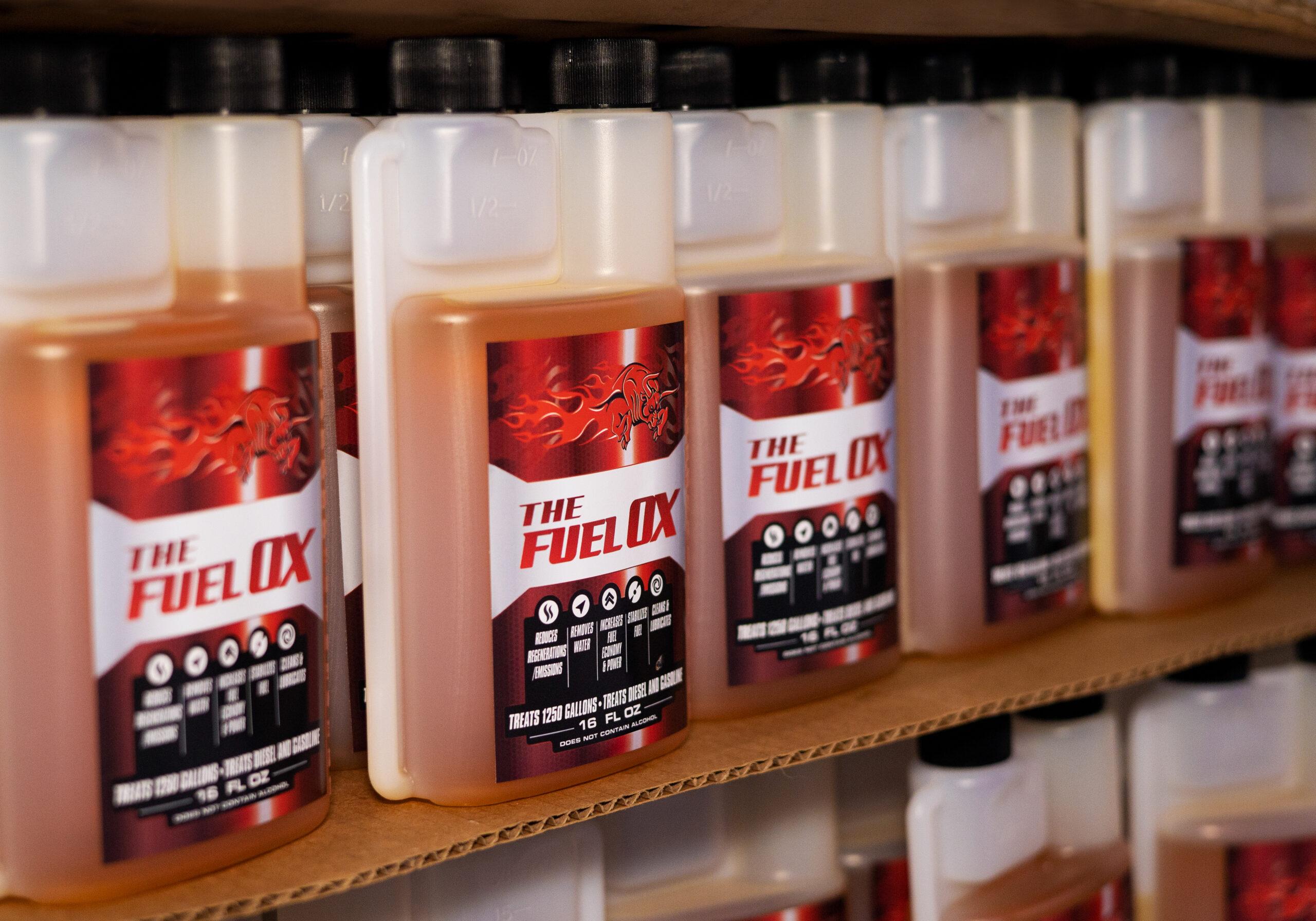
Short answer: yes. Our products are compatible with HVO and renewable diesel. Whether you’re switching your fleet, generators, or equipment over to HVO, you can keep using our products with zero hesitation.
The reason circles right back to chemistry. HVO is a paraffinic hydrocarbon fuel, putting it in the same family as petroleum diesel.
Fuel additives engineered for diesel are built to work with hydrocarbons just like these, so they stay every bit as effective and every bit as useful when they meet HVO in the tank.
Why HVO Users Still Benefit From a Fuel Additive
There’s a common misconception out there that cleaner fuels don’t need additives. And while HVO does burn cleaner than petroleum diesel right out of the pump, that doesn’t mean a quality additive has nothing left to do.
A combustion catalyst additive can still sharpen engine performance and fuel economy, helping you squeeze more usable energy out of every gallon. That benefit holds for HVO just as much as it does for conventional fuels, because no fuel, however refined, burns perfectly on its own.
Long-term storage benefits stack up nicely, too, when you pair HVO with the right additive. Sure, HVO is already more stable than FAME, but stored fuel still has to fight off water accumulation, microbial growth, and slow degradation.
Throwing Fuel Ox® with Combustion Catalyst into the mix gives you a backup layer of protection. And that matters most for backup generators, seasonal equipment, marine vessels, and any tank where fuel doesn’t move much.
And then there’s the mixed-fuel reality. Plenty of operators aren’t running 100 percent HVO across every truck and every tank. Some blend HVO with petroleum diesel, some are phasing it in over time, and some keep both fuels available based on supply or price.
In every one of those scenarios, additive performance has to deliver across the full blend, not just the renewable slice.
How Fuel Ox® Complements HVO
Fuel Ox® is built to do things HVO can’t do on its own, which is why the two work as a natural pairing rather than a redundant one.
The combustion catalyst encourages a more complete burn, which can mean less soot, less unburned fuel, and cleaner internal engine surfaces. Layered on top of HVO’s already-lower emissions profile, that adds up to a noticeably cleaner-running engine.
It also looks after the tank and the fuel system itself. We’re talking corrosion control, water dispersion, and a maintenance-level biocide that helps fend off microbial trouble in stored fuel. HVO’s storage stability is solid, sure, but no fuel is bulletproof against water intrusion or contamination, especially in older tanks or equipment that sits idle for weeks at a time.
Cold weather is another spot where Fuel Ox® and HVO play well together. HVO already has improved cold flow properties compared to FAME biodiesel, and Fuel Ox® layers on additional cold filter support that complements those properties beautifully when winter operations kick in.
The takeaway for fleets is refreshingly simple: switching to HVO and using Fuel Ox® aren’t competing moves; they’re complementary ones. HVO upgrades the fuel, while ours protects the fuel and the system it flows through.
You don’t have to pick between cleaner fuel and good fuel maintenance. You get to have both.
The Bottom Line
HVO is a chemically diesel-like, lower-emission renewable fuel that drops right into many existing diesel engines. It offers cleaner combustion, better cold-weather behavior, and stronger long-term storage stability than traditional FAME biodiesel, which is exactly why so many fleet operators and equipment owners are giving it a serious look.
But here’s the thing: HVO doesn’t replace solid fuel maintenance practices. Tanks still need defending against water, microbes, and corrosion.
Engines still benefit from a more complete burn. And mixed-fuel operations still need additives that pull their weight across petroleum diesel, renewable diesel, and every blend in between.
If you’re already running HVO, transitioning toward it, or blending it with conventional diesel, our products are designed to ride right alongside your fuel, improving combustion, protecting your storage, and supporting your equipment all year long.
Take a look through the Fuel Ox® lineup to find the right treatment for your application, and don’t hesitate to reach out to the Fuel Ox® team if you’ve got specific questions about your fuel system or engine.


