

News
How to Choose the Right Additive to Prevent Fuel Gelling in Fleets

When winter hits, diesel fuel can turn from a free-flowing liquid into a thick, cloudy sludge. This problem is called diesel fuel gelling, and it happens because diesel contains natural paraffin wax crystals. When temperatures drop low enough, that wax starts to form tiny crystals.
As the cold gets worse, those crystals clump together and thicken the fuel. Eventually, the fuel can no longer pass through filters and lines, and the engine simply will not run.
For fleets, this is more than a minor headache. Gelled fuel can leave trucks stranded on the side of the road, delay important deliveries, and force expensive towing and repair calls.
Every hour a vehicle sits idle costs money, and missed deliveries can lead to costly downtime and lost revenue. When several trucks gel up during the same cold snap, the losses add up fast.
The good news is that fuel gelling is largely preventable. Choosing the right fuel additives is a smart, proactive strategy rather than a last-minute scramble. This is where a trusted partner like Fuel Ox® comes in, offering a full line of winter fuel additives engineered to keep fleets running through the coldest months.
In our experience working with fleets through harsh winters, the operators who plan ahead almost always avoid the worst of the trouble. This guide will walk you through how gelling happens and how to pick the additive that fits your operation.
Key Takeaways
- Cold weather makes diesel’s natural paraffin wax form crystals that clog filters and lines, stalling engines.
- The Cold Filter Plugging Point (CFPP) is the key metric for gauging cold-weather fuel performance.
- Additive types include cold flow improvers, pour point depressants, anti-gels, de-icers, and cetane improvers.
- Prevention works far better than treatment, so dose fuel before a cold snap hits.
- Compare additives on CFPP improvement, dosage, fuel compatibility, OEM approval, and storage stability.
- Fuel Ox® Cold Charge prevents gelling, lowers the pour point 15–20 degrees, and boosts fuel economy by 7–10 percent.
Understanding How Fuel Gelling Happens
The Role of Wax Crystals in Diesel
Diesel fuel naturally contains paraffin wax. At normal temperatures, this wax stays dissolved, and you never notice it. But as the thermometer drops and diesel begins to cool, the wax begins to separate out and form solid crystals.
The colder it gets, the more crystals form and the larger they grow. In sub-zero temperatures, this process speeds up quickly.
At a certain point, these crystals become so thick and numerous that the fuel can no longer flow. This is when the trouble starts. The wax can clog fuel lines and block fuel filters, cutting off the supply the engine needs to keep running.
Clogged filters are one of the most common reasons a truck refuses to start on a cold morning.
Key Cold-Weather Fuel Metrics to Know
To choose the right additive, it helps to understand a few basic numbers that describe how fuel behaves in the cold:
- The Cold Filter Plugging Point, or CFPP, is the temperature at which wax crystals start to plug the fuel filter. It is one of the best indicators of how your fuel will perform in freezing conditions, because it reflects the point where real operating problems begin.
- Ambient temperature is simply the outside air temperature your vehicle faces. When the ambient temperature falls below your fuel’s operating limits, gelling becomes a real risk. Matching your fuel and additive choices to the coldest temperatures you expect is the key to staying on the road.
Types of Additives That Prevent Fuel Gelling
Not all additives do the same job. Understanding what each type does will help you make a confident choice and get the right winter protection for your fleet.
Cold Flow Improvers (CFIs)
Cold flow improvers change the way wax crystals form. Instead of letting the wax grow into large clumps, CFIs keep the crystals small and separate. This allows the fuel to keep flowing at lower temperatures and pass through filters more easily.
Pour Point Depressants (PPDs)
Pour point depressants lower the temperature at which fuel completely stops flowing. The pour point is basically the coldest temperature at which the fuel can still move. By pushing that point lower, PPDs help keep fuel pumpable in harsh conditions.
Anti-Gel Additives
Anti-gel additives are all-in-one products. They combine cold flow improvers with other helpful components to improve overall cold-weather performance. Many of these winter additives also offer added lubricity and other benefits, giving your fuel system more complete protection. For many fleets, these blended products offer a convenient way to cover several bases at once.
De-Icers
Small amounts of water often find their way into fuel tanks and fuel systems. In cold weather, that water can freeze and cause its own set of problems. De-icers help manage this water so it does not turn into ice and block fuel flow.
Cetane Improvers (Optional)
Cetane improvers, sometimes called cetane boosters, help diesel engines start more easily in cold weather and are often included in winter fuel formulations. They can improve cold engine starts and add a bit of power on frosty mornings.
Keep this important caveat in mind, though: cetane improvers do not prevent gelling on their own. They support cold engine starts, but they are not a substitute for a true anti-gelling product.
Key Factors to Consider When Selecting a Fleet Additive
Once you understand the types of additives, picking the right one comes down to matching the product to your specific needs. Consider these factors:
- The lowest temperatures you expect in your region. The colder your winters, the more protection you need, especially during extended periods of freezing weather.
- The diesel fuel grade you use. Summer diesel and winter diesel behave differently in the cold, so your additive choice should account for what is already in your fuel tanks.
- Whether the product is meant for prevention or for treating fuel that has already gelled, these are two different jobs, and using the wrong one can leave you disappointed.
- Compatibility with modern engines and aftertreatment systems. Today’s trucks often use diesel particulate filters, or DPFs, and sensitive fuel injectors. Always confirm that an additive is safe for these systems before adding it to your fuel, since the wrong product can create harmful deposits over time.
Preventive Use vs. Treating Already-Gelled Fuel
Here is one of the most important lessons we share with fleet operators: most additives are designed to be added before temperatures drop, not after. When you treat clean, warm fuel ahead of time, the additive can do its job and keep wax crystals from causing trouble.
Trying to reverse gelling after it has already happened is much harder. Once wax has formed and clogged your filters, pouring in an additive rarely fixes the problem quickly. In many cases, the vehicle still needs to be warmed up or towed before it will run again.
The best practice is simple. Treat your fuel before a cold snap arrives, ideally when you fill up and while the fuel is still flowing freely. Watch the weather forecast during the winter months and dose your fuel ahead of any expected drop in temperature.
A little planning goes a long way toward keeping your fleet moving all season long.
Evaluating Products for Procurement
Once you know which type of additive you need, the next step is choosing a specific product to buy. For a fleet, this is a purchasing decision as much as a technical one. The right choice protects your vehicles and your budget at the same time.
Criteria That Matter Most
When comparing products on the market, focus on the details that actually affect performance and cost. In our experience, these are the factors that separate a reliable additive from one that will let you down:
- CFPP improvement. This tells you how much the additive lowers the cold filter plugging point. A bigger improvement means better protection in extreme cold, so this is often the first number to check.
- Dosage per gallon or liter. Some products require only a small amount per tank, while others need much more. The dosage rate directly affects how much you spend over a season.
- Compatibility with ULSD and biodiesel blends. Modern fleets often run ultra-low-sulfur diesel and biodiesel mixes. Make sure any additive works well with the exact fuels you use and helps keep your injectors clean.
- OEM approvals or recommendations. When engine makers approve or recommend a product, it gives you added confidence that it is safe for your equipment.
- Storage stability. If you buy additives in bulk, they may sit for months before use. A stable product holds up in storage and performs just as well when you finally need it.
Balancing Performance and Cost at Scale
A small difference in dosage may not seem like much for a single truck, but it looks very different across a large fleet. If one product needs twice the dose of another, your total seasonal cost can climb quickly once you multiply it by hundreds of tanks.
Over the long run, a good additive can even help by improving fuel economy and keeping engines running cleanly.
Still, the cheapest option is not always the smartest buy. A low upfront price means little if the product fails during a cold snap and leaves your trucks stranded.
We encourage fleet managers to weigh product price against reliability and the cost of downtime. Preventing a single-stranded vehicle often pays for a whole season of quality additives, and better fuel economy is a welcome bonus.
Working With Your Fuel Supplier on Pre-Treated Winter Diesel
Additives are not the only tool available to you. Many large fleets can source winter diesel that has already been treated for cold weather directly from their fuel supplier. This is a powerful option that is easy to overlook.
Supplier-blended winter fuel is often formulated for the local climate and blended under controlled conditions. Because of this, it can outperform aftermarket additives used on their own.
The supplier knows the regional temperatures and treats the fuel to match, which also helps keep emissions in check since a cleaner-burning fuel reduces emissions.
For the best protection, many fleets combine both approaches. They start with pre-treated winter diesel from their supplier and then add their own additive for an extra margin of safety during the coldest stretches.
This layered strategy gives you room to handle unexpected temperature drops and provides more complete protection for your equipment.
Building a Cold-Weather Fuel Strategy for Your Fleet
The strongest defense against gelling is a clear plan you follow every year. A good cold-weather fuel strategy pulls together everything covered above into a simple routine.
Start by matching your additive type to your climate and fuel grade. A mild region needs less protection than an area with deep winter freezes, and your fuel grade should guide your choices. Next, set up preventive treatment routines before winter arrives so that fuel is always treated ahead of the cold, not after gelling has begun.
Finally, document your OEM and aftertreatment compatibility requirements so everyone on your team knows which products are safe for your diesel particulate filters and fuel injectors.
Writing these steps down turns good intentions into a dependable habit. It also makes training new staff easier and keeps your whole operation on the same page.
How Fuel Ox® Can Help Your Fleet Stay Ahead of Winter
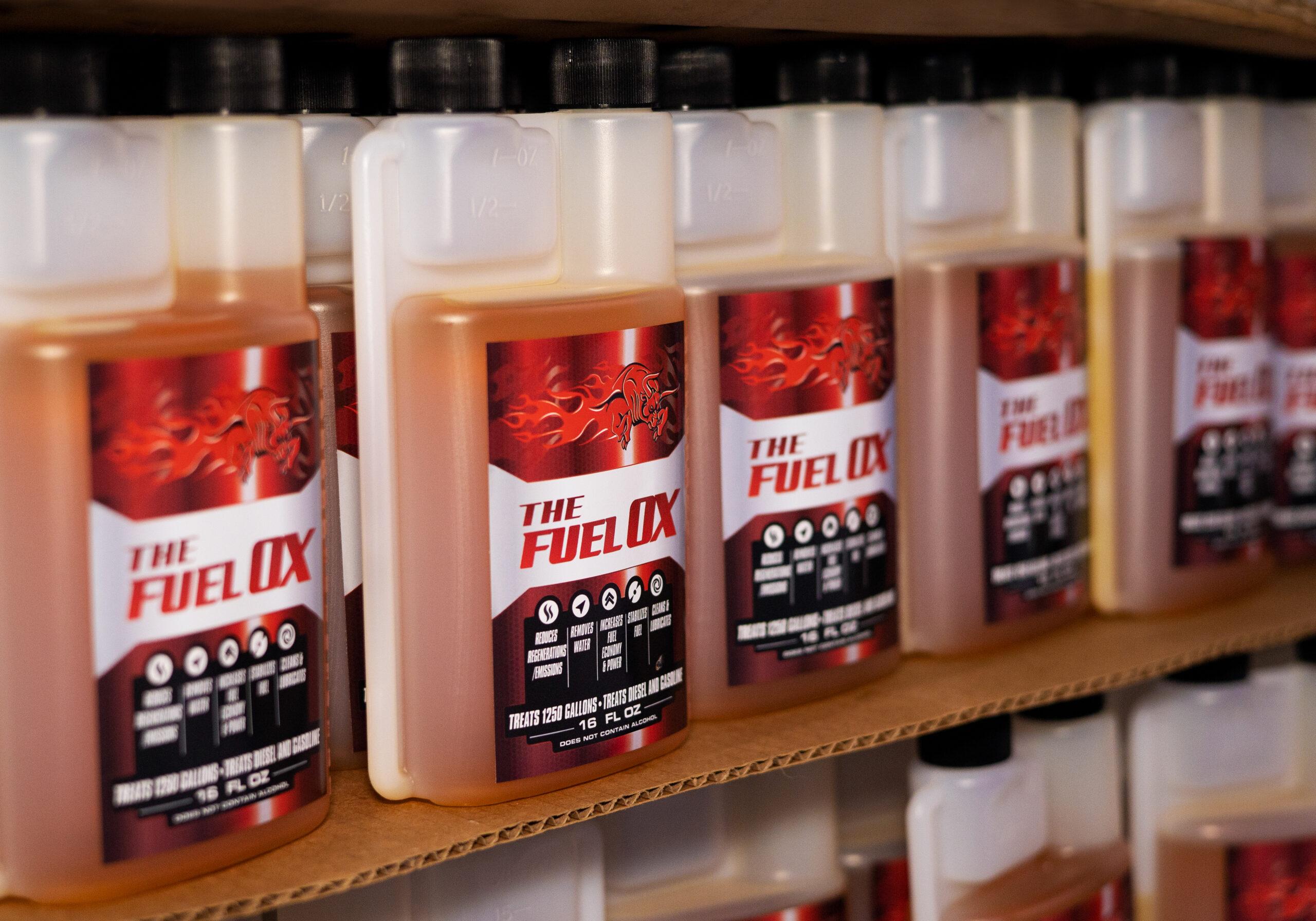
If you want a proven partner for cold-weather protection, Fuel Ox® offers a full line of winter fuel additives built for fleets like yours. Our Cold Charge product is a two-in-one winter treatment that prevents fuel gelling and icing, lowers the fuel pour point by 15 to 20 degrees, and controls wax formation to keep filters and lines clear.
It also restores lubricity lost in ULSD to protect your injectors and cleans the fuel system as it works.
On top of that, Cold Charge improves fuel economy by 7 to 10 percent and reduces regens and emissions thanks to its patented combustion catalyst. That means you get reliable cold starts and real savings in one bottle, all season long.
Choosing the Right Additive With Confidence
Choosing the right additive to prevent fuel gelling does not have to be a guessing game. When you match the additive type to your needs, weigh the selection factors that matter, and apply solid procurement criteria, you can buy with confidence.
Each piece builds on the last, from understanding paraffin wax crystals to comparing products on the shelf.
Above all, remember that prevention beats reaction every time. Treating your fuel early and working closely with your fuel supplier are two of the most effective ways to reduce cold-weather risk. With a thoughtful plan in place, your fleet can keep moving smoothly no matter how far the temperature falls.
If you have any questions about choosing the right winter fuel additive for your fleet, preventing diesel fuel gelling, or protecting your engines through the cold months, just contact Fuel Ox®.


